How can HR practitioners help their organisations to move beyond outdated narratives about work and create space for new ones to emerge?
For decades, deeply entrenched narratives have shaped how organisations understand growth, leadership and transformation. Once a source of clarity, they now risk obscuring the realities of modern working life – where disruption is constant, leadership is relational and technology stories too often diminish rather than empower the human workforce.
Earlier this year, some of the speakers at AHRI’s National Convention and Exhibition highlighted that HR practitioners can no longer rely on inherited scripts. To guide their organisations through disruption, they must help write new stories that reflect the realities of today’s workplace and create conditions where both people and organisations can thrive.
Based on insights from the opening day of the Convention, here are three traditional narratives that stood out as no longer serving us – and how HR leaders can begin to rewrite them.
1. Reframing growth as disruption, not a destination
Growth is something every professional is expected to pursue, and something every organisation wants to achieve. But what happens when growth itself becomes uncomfortable?
For Whitney Johnson, CEO and Co-Founder of Disruption Advisors, this discomfort isn’t a setback – it’s the starting point.
At the opening keynote speech, she framed growth through the ‘S-curve of learning’, a model that charts the experience of starting something new, gaining traction and eventually reaching mastery.
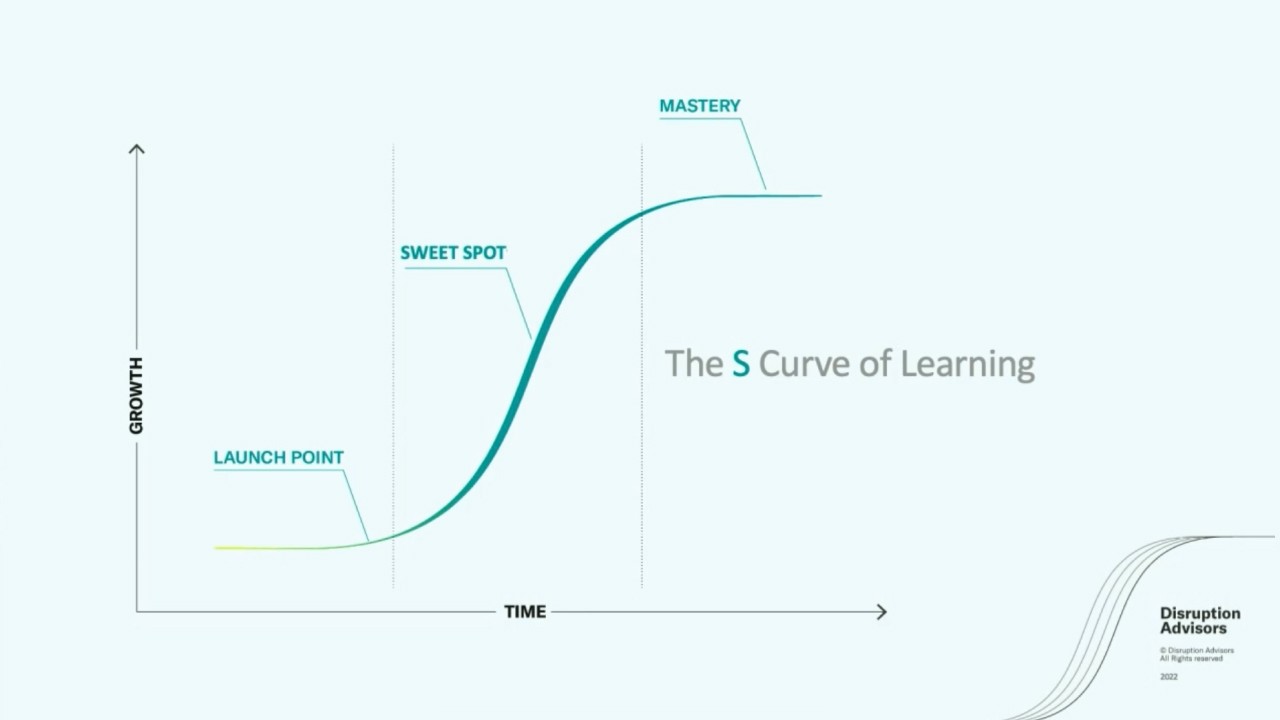
“We can use the S-curve to help us understand how we learn, how we grow and what growth feels like,” she says. “You’re going to navigate the launch point, move into the sweet spot, then get to mastery. Mastery doesn’t mean you are the world’s foremost expert – it just means you’ve done what you came to do.”
Individuals can – and should – have what Johnson refers to as “a portfolio of S-curves” at any one time.
For example, a senior HR leader may be at mastery in employee relations, having decades of experience. At the same time, they might be in the sweet spot with hybrid work policy design, as they’ve moved past the early trial phase and are building confidence in what works.
“The price of a new and better self is your old self.” – Whitney Johnson, CEO and Co-Founder, Disruption Advisors
Simultaneously, they might be at the launch point in using generative AI for workforce planning – feeling uncertain, but beginning to experiment.
“The S-curve is a map that helps you navigate the emotional terrain of doing new things, so change doesn’t feel so scary.”
Johnson outlined three accelerants that can help individuals and organisations move up the curve:
Play where no one else is playing – focus on market risk (when you create or pursue an opportunity that doesn’t yet formally exist), not just competitive risk (when you pursue an opportunity that many others are also chasing). In short this means instead of fighting for the same opportunities, we need to create new ones.
“Market risk is less risky, but it feels less certain because you don’t know if there’s a job. So we lean toward competitive risk when it actually makes more sense to take market risk. In fact, we saw in research, the odds of success when you take on market risks are 60 times higher and the revenue opportunity 20 times greater.”
Lean into your distinctive strengths – the talents that feel easy or attract consistent compliments often hold the greatest value, she says.
“If it’s easy for you, you think it’s easy for everyone else. But it’s not – that’s your strength.”
Embrace constraints – limitations can fuel creativity and progress, rather than impede it.
“Your constraints are not the obstacle – they’re the tool of creation,” says Johnson. “Skateboarders learn fast because every move has an immediate consequence. That’s the gift of constraint.”
Johnson also emphasised the importance of ecosystems – the managers, mentors, colleagues and networks who determine whether growth is sustained. HR leaders have a dual responsibility: to nurture their own ecosystems, and to create connected, resilient and nurturing environments for others’ growth.
“[People will ask], ‘Do I feel like there’s growth for me in this organisation, and that my manager will make it possible for me to act on that growth?’ As long as people feel that, they will stay in the organisation in perpetuity.”
Moving up the curve requires more than effort, she says. More often than not, it means rewiring your brain to push beyond your internal barriers.
Johnson illustrated this with a story of elephants trained from birth to accept artificial limits. As calves, they are chained to a small stake in the ground. In their early years, they tug and strain against the chain, but when they fail to break free, they eventually stop trying.
By the time they are fully grown – and are strong enough to uproot the stake with ease – they remain tethered, not by the physical chain, but by the memory of earlier failure. This learned helplessness means the elephant stays confined, even though it has the power to move beyond its boundaries.
Johnson used this as a metaphor for leaders: many of the constraints that hold us back are not real barriers, but mental constructs we’ve internalised over time.
“Pull up the stake out of the ground; go where you want to go.
“When you’re thinking about moving along these curves… it’s going to feel a little painful, [but] the price of a new and better self is your old self.”
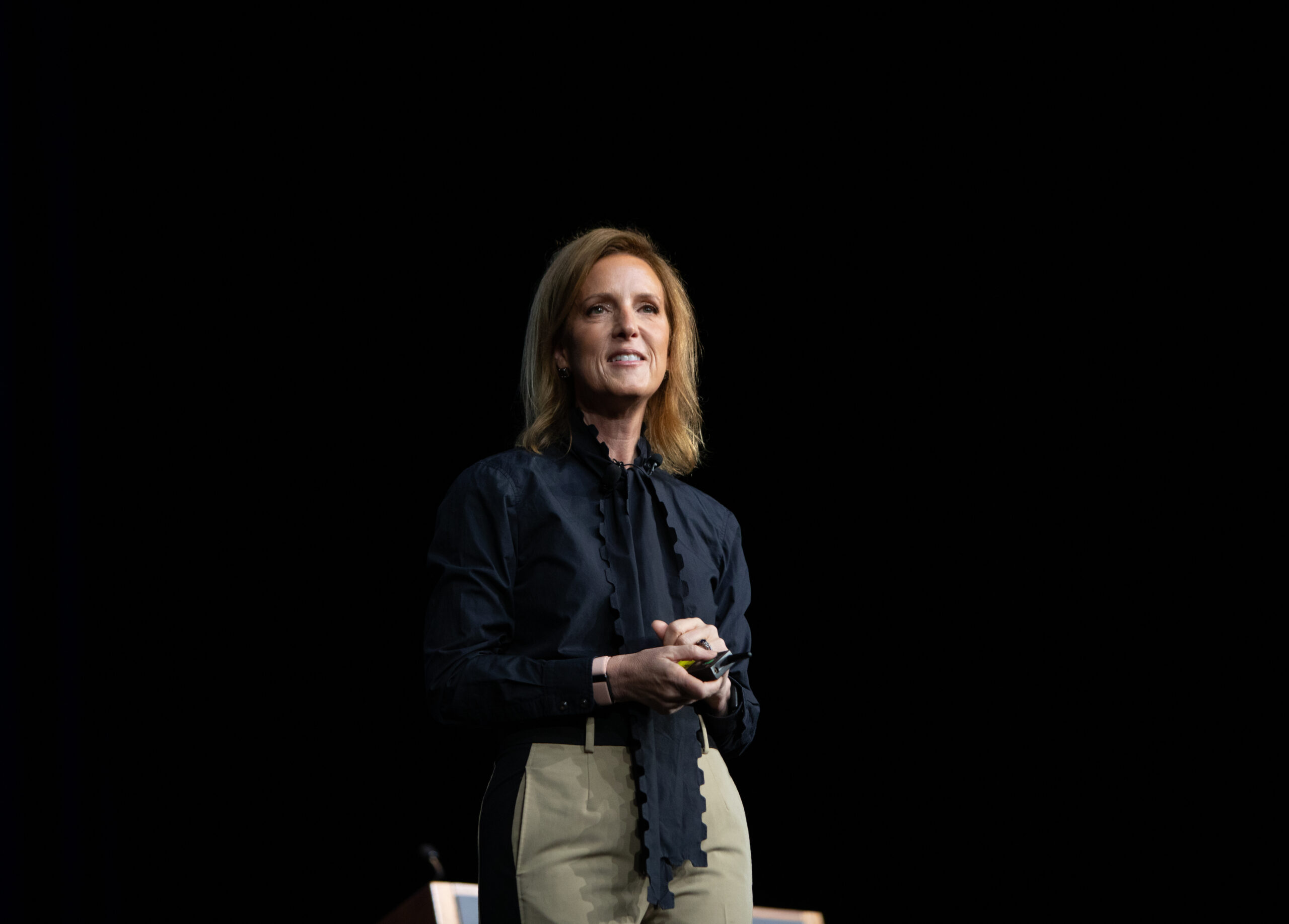
Whitney Johnson
2. Breaking up with leadership archetypes
Later in the day, delegates turned their attention to another pertinent topic for HR practitioners: building future-ready leaders.
Despite vast sums invested in leadership development, organisations around the world – including Australia – continue to report a shortage of capable leaders.
According to Wojciech Materka, Adjunct Professor of Organisational Behaviour at INSEAD Business School, the problem with leadership today is not how it is practised, but instead the deeply entrenched narratives that surround it.
During his deep dive session on transformations at work and in working life, Materka explored the various archetypes that have informed our view of a leader across generations, beginning with mythical stories of leaders as heroes “rescuing” their followers.
More recently, he says, leadership has been defined almost entirely by hierarchy.
“A lot of [modern] theories about leadership came from the military,” he says. “And of course, in that context, formal authority is everything, and everybody is taught to follow that – because that is what makes you a leader.”
Over time, this was layered with another narrative: that leadership is about possession – a set of skills, traits and virtues that can be accumulated and measured.
However, he says, none of these narratives reflect the reality of what leadership means today. And clinging to these long-held beliefs is costing businesses.
“We spend about $230 billion around the world on leadership and leadership development,” says Materka. “But do we have a good return on this investment in the world? You already know the answer.”
To illustrate this disconnect, he points to a study from the World Economic Forum where 87 per cent of respondents reported that they felt their boss did not possess the necessary skills to address workplace challenges.
To help close this gap, he argues that we need to build a new narrative around what leadership means – one that recognises it as a shared process powered by interpersonal relationships, rather than a set of individual qualities.
A key aspect of a leader’s role, he says, is to contain the turbulence that modern employees are exposed to – to interpret it, make sense of it and create psychological safety so people don’t collapse under the uncertainty.
“We spend about $230 billion around the world on leadership and leadership development. But do we have a good return on this investment in the world? You already know the answer.” – Wojciech Materka, PhD, Adjunct Professor of Organisational Behaviour, INSEAD Business School
“[Leaders] need the capacity to hold and transform difficult emotions – theirs and others’ – without being overwhelmed or destructive,” says Materka. “That might mean sitting with anger, envy or grief and helping the team metabolise those emotions, rather than labelling them as resistance.”
In practice, containment looks like patient presence: creating space for dialogue, naming emotions that surface and ensuring the organisation can continue to function. Without this capacity, he warned, leaders risk mistaking necessary turbulence for failure, and shutting down the very process that makes transformation possible.
“We’ve [told ourselves] this story that business isn’t personal, but it is – especially if you want to transition and transform, and especially these days when people go to work because they look for meaning, not just money,” he says.
The task for HR, therefore, is not to abandon the concept of leadership altogether, but to redefine how it is nurtured – namely, by creating spaces where people can make sense of disruption together, acknowledge the emotions that come with change and begin to co-write new stories about the future.
Organisations that invest in this relational work will empower themselves to unlock forms of leadership that are both more resilient and more human.
3. Taking culture off HR’s plate
For Isa Notermans, Chief People Officer at Fleet Space Technologies, HR practitioners should consider letting go of the belief that they alone need to own culture.
“I’m starting to decouple myself from the responsibility of culture as a core part of my work,” she told delegates in a panel session. “Culture isn’t a product you can engineer once and then roll out,” she says. “It shows itself in the margins – in the way new people bring different perspectives, in how teams navigate uncertainty, in how ideas take hold and evolve.”
This reframing challenges a long-standing assumption in HR: that culture can be controlled through values statements, frameworks or top-down initiatives. While those tools may provide structure, Noterman says they can also breed over-simplification and over-reliance on HR. Instead, she emphasised the importance of creating the conditions for culture to surface organically, even if that means accepting uncertainty and friction along the way.
In her view, culture’s unpredictability is not a liability but a strength – evidence that the organisation is alive, adaptive and capable of absorbing change. The task for HR, then, is less about ownership and more about stewardship: ensuring the environment is safe, curious and flexible enough for culture to emerge in ways that serve both people and strategy.
This perspective also challenges the enduring expectation that HR should provide standardised “playbooks” – documents that can be applied repeatedly to any situation. While they offer neatness, Noterman believes they risk oversimplification.
“They smooth out the edges. And I think the edges need to remain a little bit rough… that’s what allows less codependency on HR and more agility in the business,” she said.
Instead, Fleet Space has adopted an ongoing scorecard approach. The scorecard tracks key behaviours – from learning agility to consistency – and even asks leaders whether they would “enthusiastically rehire” each employee. Combined with regular coaching and development conversations, it ensures performance and growth are continuously recalibrated, rather than tied to a rigid cycle.
4. Changing the way we talk about AI-related job loss
Few narratives loom larger in the modern workplace than the fear that technology – and AI in particular – will inevitably displace human workers. Headlines announcing job losses “due to AI” are now routine.
But as technology futurist Dr Catherine Ball argued in the final keynote of the day, this story is not only misleading – it is holding leaders back from more imaginative uses of technology.
Dr Ball argues that we shouldn’t be blaming technology for these redundancies,
“It’s not true and it’s not fair and it’s not a reflection on the inherent skills and capabilities of those people,” she says.
The real challenge is not technological determinism, but how leaders choose to respond, she says.
For HR leaders, this means interrogating the language we use about technology. To say a role has been “lost to AI” misplaces the responsibility. It is not AI that eliminates people – it is organisational choices about how AI is deployed. This distinction matters for how organisations maintain trust and social licence.
“Be like the [organisations that] are saying, ‘We’re going to use AI to turn our 10,000 staff into 20,000 staff worth of work, not the people saying we’re going to use AI to take 10,000 staff and turn into 5,000 staff,” says Dr Ball.
The risk of clinging to the old narrative is twofold. First, it fosters resistance and fear among employees, fuelling cynicism toward change.
Second, it blinds leaders to the opportunity that augmentation offers – unlocking productivity while also expanding the range of meaningful work people can do.
By contrast, the more provocative stance is to see technology as a human amplifier, not a headcount reducer.
“Every industrial revolution has created more jobs than it has removed,” says Dr Ball.
This reframing challenges a second outdated story: that organisations need a standalone “AI strategy.”
Dr Ball was clear – organisations do not need a separate plan for AI. They need a business strategy that integrates all emerging technologies, with AI considered alongside other tools. Treating AI as separate from broader business planning risks over-indexing on hype and under-investing in where value will truly be created.
“AI is just a tool,” she reminded the audience. “If you’re a carpenter, you don’t need a ‘hammer policy.’”
This perspective puts accountability back on leaders to embed AI into their existing strategic frameworks – alongside questions of workforce planning, productivity, ethics, sustainability and culture.
The provocation here is sharp: if organisations continue to repeat the myth that “AI kills jobs” and rush to bolt on an “AI strategy,” they risk writing themselves out of the most important conversations of the decade.
Instead, HR leaders must help their organisations tell new stories – ones that position technology as a partner in human potential, not its adversary.
“Do not [inherently] trust these programs. Interrogate them, disagree with them, play with them. Don’t look to make people redundant. Make roles redundant and build new opportunities [for people].”
In an era when people are more attuned than ever to the stories leaders tell about work, this reframing is a test of HR’s capacity to guide organisations through disruption without defaulting to fear or fads.
The HR leaders who succeed will be those who can shift the script – from inevitability to choice, from replacement to augmentation and from technology as a silo to technology as strategy.