Zombie leadership might be running your organisation, says leadership and complexity expert Dr Jason Fox.
Somewhere in your organisation right now, a zombie is walking the halls. It might be the leadership framework pinned to the intranet. It might be the competency model HR built five years ago. It might be the off-site agenda sitting in someone’s inbox. It looks like leadership. It just isn’t alive.
It’s a pattern Dr Jason Fox has watched play out across organisations for years — and he has a name for it: domesticated leadership.
“When we feel time-poor, we tend to favour quick fixes, familiar solutions and default ways of doing things,” says Fox, who is speaking at AHRI’s upcoming National Convention and Exhibition in Brisbane from 4-6 August.
“What I’m seeing is a lot of people opting for very cookie-cutter, tick-box, linear programs that look like a kind of adult daycare,” he says. “You run people through this factory of content, and the result is you’ve effectively groomed them to operate within the boundaries of the system.”
The problem isn’t that these programs are poorly designed. It’s that they were designed for a different era — one that no longer exists. Between 2010 and 2020, organisations operated in relatively stable, predictable conditions, he says. Optimise, double down, run the play. It worked.
But that context has shifted dramatically, and it’s Fox’s view that the leadership development industry hasn’t caught up.
“I’m not saying go full wild,” Fox adds. “But we do need to venture beyond the paddock.”
The zombie leadership ideas that won’t die
In 2024, a group of academics published a paper in the journal Leadership Quarterly called ‘Zombie Leadership: Dead Ideas That Still Walk Amongst Us.’
The paper identifies eight leadership concepts that function as myths — widely taught, persistently believed and largely non-conducive to our current business requirements. They’re not malicious. They’re just so embedded in how organisations develop leaders that questioning them feels almost transgressive.
The researchers highlight eight zombie leadership axioms:
- Leadership is all about leaders — Leadership is the preserve of those in formal roles; it can be understood by focusing on leaders alone.
- There are specific qualities that all great leaders “have” — Particular qualities (intelligence, charisma) equip particular people for leadership.
- There are specific things that all great leaders do — Particular behaviours are the hallmark of effective leadership.
- We all know a great leader when we see one — There is consensus that some leaders are better than others.
- All leadership is the same — There is an essential “leadershipness” that can be discerned across all contexts.
- Leadership is a special skill limited to special people — Leadership is an elite activity that is extraordinary, exclusive, and expensive.
- Leadership is always good and it is always good for everyone — Leadership is a universal good from which everyone benefits.
- People can’t cope without leaders — Everyone needs leadership and it is always required for group success.
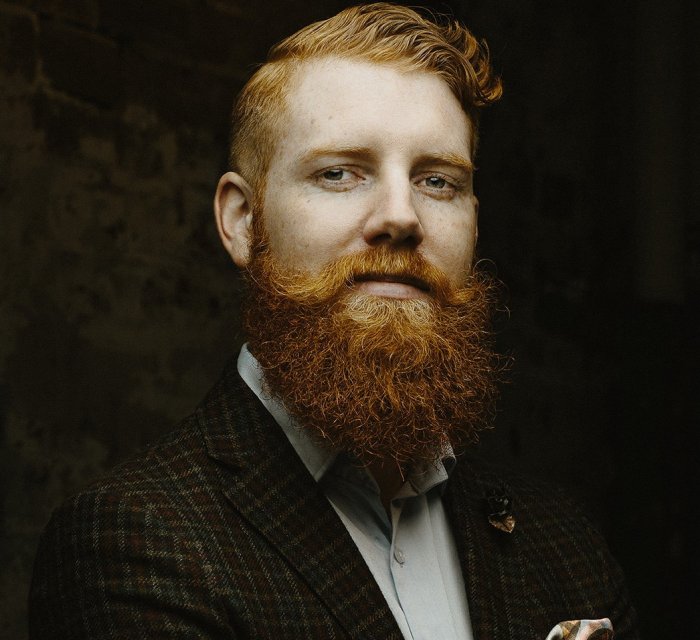
Dr Jason Fox
Fox says many of these speak to the idea of the heroic individual leader: the powerful figure who arrives with all the answers and saves the day. It’s a model that has shaped countless leadership programs, competency frameworks and executive hiring decisions. And, according to Fox, it’s actively getting in the way.
“There’s a lingering patriarchal undercurrent within most leadership cultures — this idea that you’ve got to be bold and decisive and declarative,” he says. “What that crowds out is the capacity for doubt, for curiosity, for introspection, for widening the focus to ask: what are we missing here?”
Fox points to what he calls decision-based evidence making — a reflex he sees regularly in executive teams, where the pressure to appear confident and fluent means decisions get made first and evidence is assembled to justify them afterwards. It’s the performance of certainty in an era that increasingly demands the opposite, he says.
“Doubt is evidence of thinking,” says Fox. “When someone presents with extremely high conviction and high fluency, the wise response is to wonder whether they’ve actually thought it through.”
What the zombie paper gestures toward — and what Fox has built much of his work around — is a fundamentally different understanding of what leadership actually is.
“Leadership is a relational quality,” he says. “It’s about creating the conditions in which people see what needs to be done and choose to do it — and ideally, conditions in which curiosity, empathy and discretionary effort are deployed.”
If leadership is relational rather than individual, then almost everything about how we currently identify, develop and reward leaders needs to change. And that, says Fox, is where HR practitioners come in.
“There’s a lingering patriarchal undercurrent within most leadership cultures — this idea that you’ve got to be bold and decisive and declarative. What that crowds out is the capacity for doubt, for curiosity, for introspection, for widening the focus to ask: what are we missing here?” – Dr Jason Fox
How can HR influence a new approach?
So what does this mean in practice? Fox and the Zombie Leadership researchers offer areas where HR professionals can have genuine impact.
1. Protect the relational rituals.
The informal connective tissue of organisational culture — the Friday knock-offs, the morning teas, the spontaneous post-work drinks — was largely obliterated by the pandemic, and Fox believes that, in many cases, it hasn’t come back.
“These rituals served as canaries in the coal mine: early indicators of the health of a culture,” he says. “Because you can’t justify them in terms of ROI or productivity, most of them were dropped.
“But if you’re a leader who wants results in the mid to long-term, I’d be looking to cultivate organic relational rituals — a long lunch with the team once a month, no phones, no agenda. Things that give people a chance to talk about the things they never get to in their day-to-day work.”
2. Cultivate in-house intelligence.
Fox is concerned about what he calls the epistemic pipeline — where organisations get their knowledge from, and how they develop and maintain their own capacity to think.
“My worry is that many of us are opting for the convenience of knowledge generated from large language models, or outsourcing our thinking to large consulting firms,” he says. “It’s really important that we cultivate the wit, the discernment, the wisdom in-house.”
In practice, he says this can be as simple as an in-house book or podcast club, where you bring together a group of colleagues to discuss a text or idea from the book/podcast. There’s no agenda, there’s no desired outcomes – you’re just encouraging people to think and share the process of their thinking with their colleagues.
“When you combine that with a good internal communications platform, you start to cultivate not only in-house intelligence but really good relations with bright-minded, warm-hearted people across the organisation,” says Fox.
Everyone benefits from this, he says, because leaders can really pay attention to what’s emerging and notice anomalies as they emerge and “shift their stance as the context changes”.
3. Broaden who gets developed
The research paper suggests that leadership development is currently targeted almost exclusively at those already in senior roles.
The research calls for a whole-group approach that recognises leadership can and does come from anywhere in an organisation, including junior and informal contributors.
The paper also calls for actively fighting back against the creation of leadership cabals that devolve all power to centralised executives.
Distributed leadership — where the leader role is shared rather than concentrated — is positioned as the evidence-based alternative.
4. Ask better questions.
Fox offers two provocations which HR can use to help leaders reflective on their own leadership habits and behaviours.
The first is: What are we pretending not to know?
“This question reveals the fabricated, constructed nature of some of the narratives we dwell within,” he says.
There is almost always something the room has collectively agreed not to surface — the strategy everyone knows isn’t working but no one will say out loud, the leader whose behaviour is an open secret, the restructure that solved the wrong problem. This question names that agreement.
The second question invites a longer view: What will they say of us in years to come?
“It’s a simple question,” says Fox. “But it reminds us that the conversations and decisions we’re making now will be reflected upon. Are we being wise?”
The relational signal HR should be watching
When looking for signs that your organisations leadership practices are working, Fox says to look for relational cues.
“Is there a sense of warmth, collegiality and trust? Do people actually like their teammates — the people they spend most of their waking days with? Can people deploy humour in the workplace?”
Humour, he says, is one of the better indicators of cultural health — a signal that people feel safe enough to take on different perspectives and hold uncertainty without grasping for a neat answer.
“[Humour] does so much subtle heavy lifting. It just makes for a much better quality of thinking. It means that you can think in draft… you can also express doubt without diminishing your status or standing. There’s just so many things that are baked into the quality of having the kind of relationship where humor exists.”
Dr Jason Fox is a wizard-philosopher, complexity practitioner and leadership advisor. He works with clever teams and questing leaders seeking meaningful progress – beyond the default. He is an upcoming speaker at AHRI’s National Convention and Exhibition.