
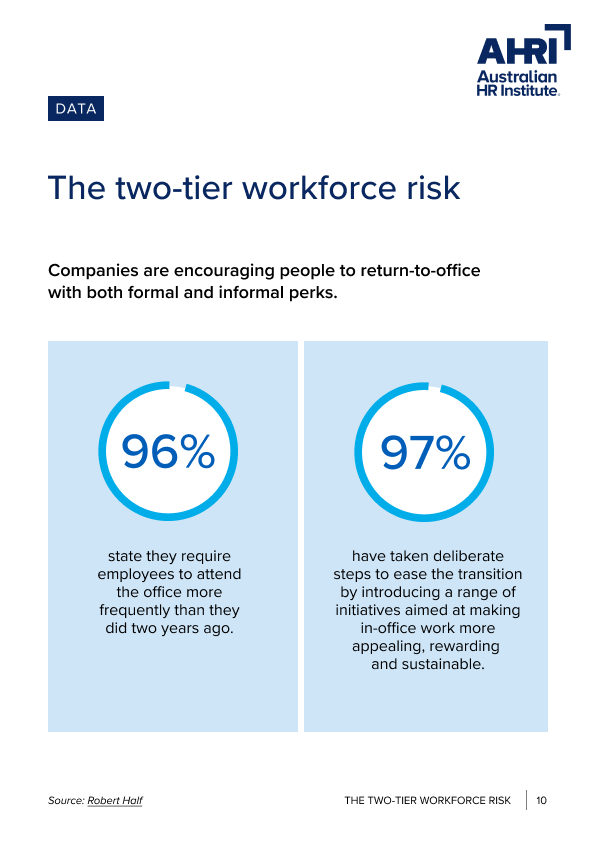
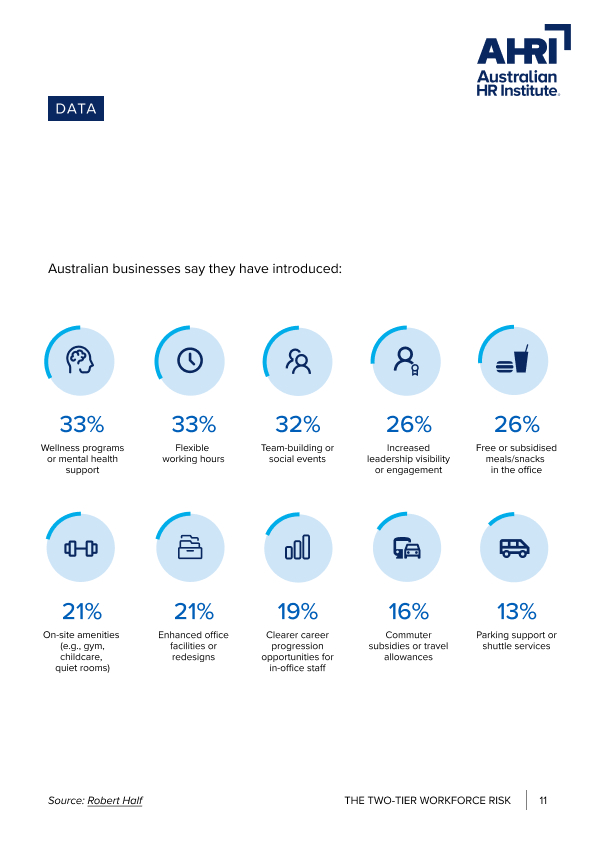
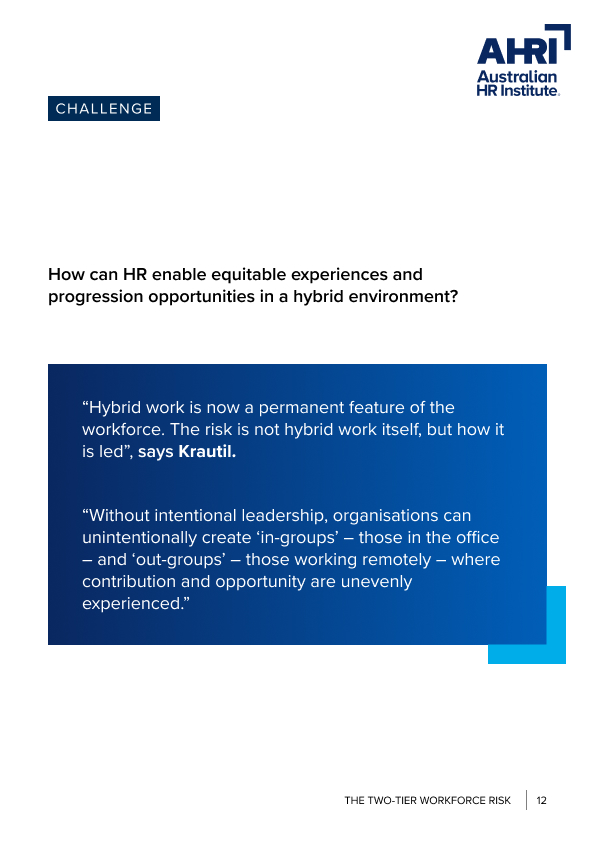
Employees are increasingly being incentivised to return to office, according to recent research, but experts warn a ‘fairness gap’ is growing between in-office and work-from-home employees.
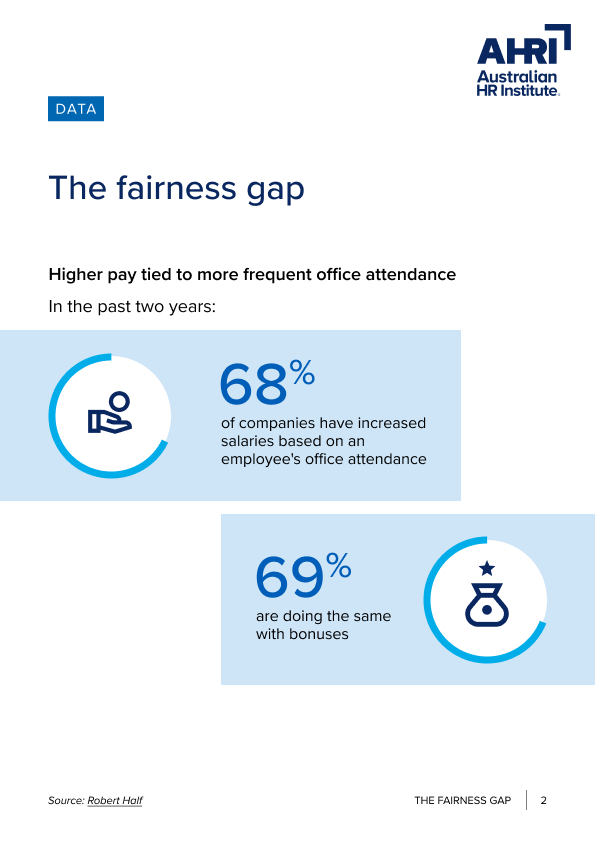
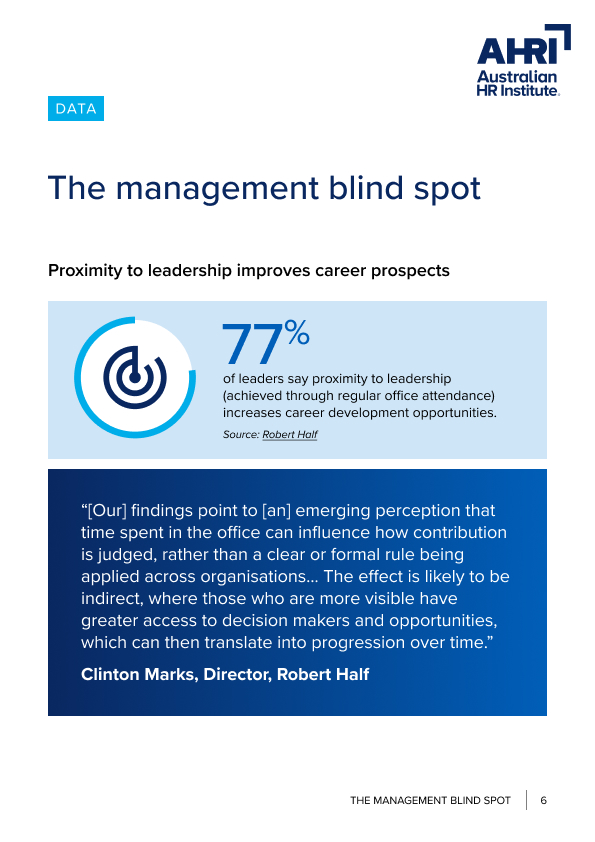
Sixty-eight per cent of companies have increased salaries based on an employee’s office attendance, according to research by recruitment agency Robert Half.
Hybrid work has become the norm in many Australian organisations, but a growing push for employees to return to office (RTO) is raising concerns about unfair treatment of employees whose work-from-home (WFH) arrangements are crucial to allowing them to work for their chosen employer.
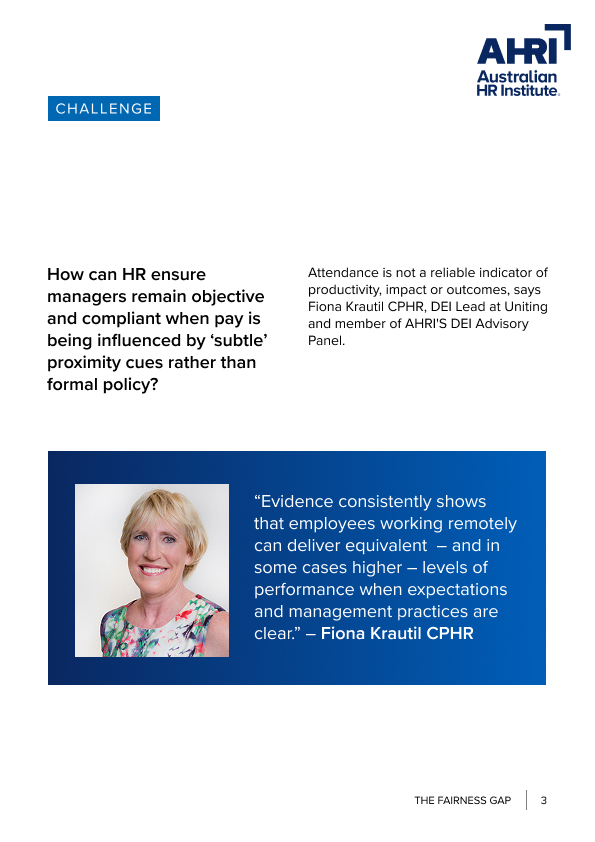
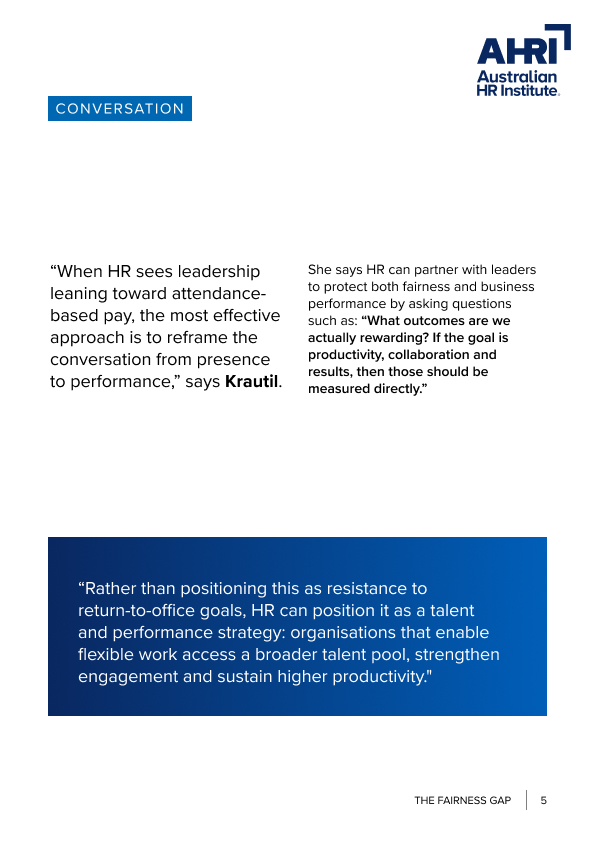
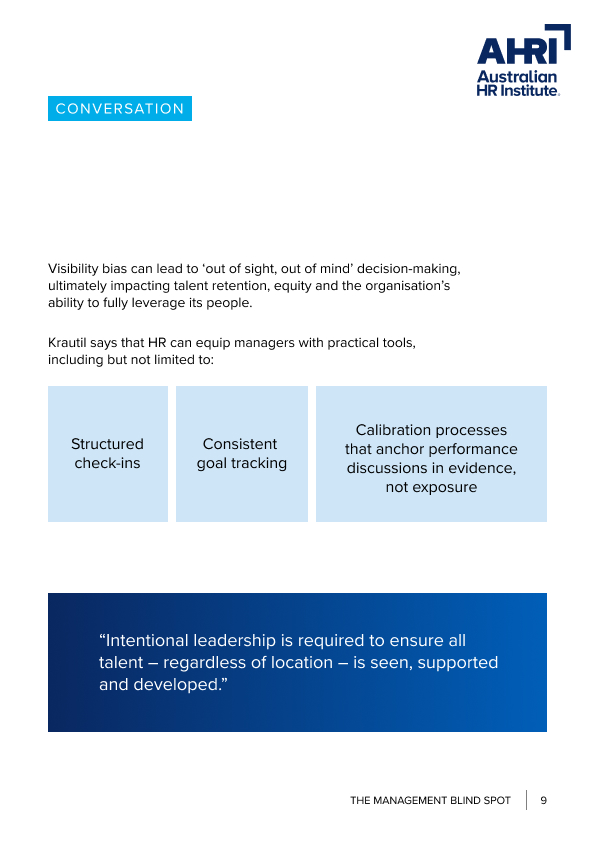
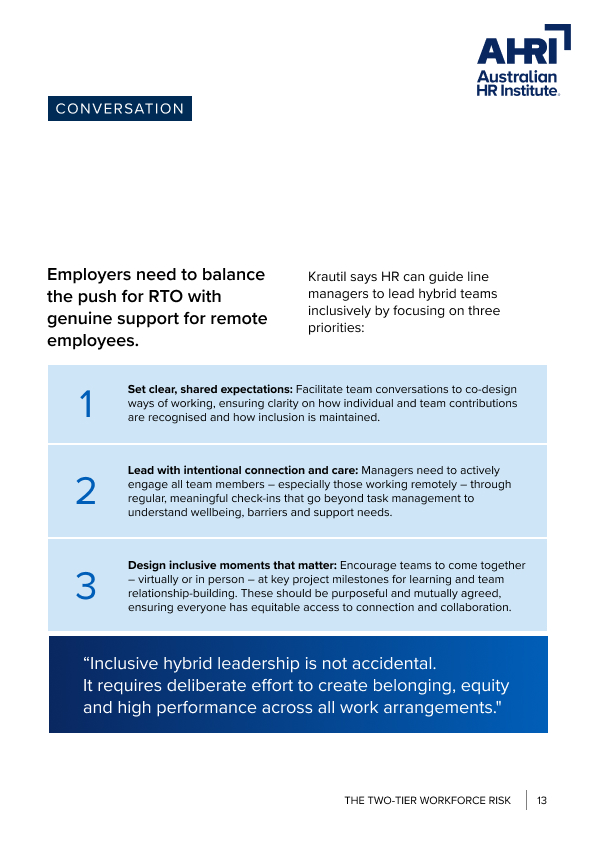
“When HR sees leadership leaning toward ‘attendance-based’ pay, the most effective approach is to reframe the conversation from presence to performance,” says Fiona Krautil CPHR, DEI Lead at Uniting and member of AHRI’S DEI Advisory Panel.
HR can partner with business leaders to protect both fairness and performance by asking which outcomes they’re actually rewarding, she adds.
Scroll through or download AHRI’s guide below for conversation pointers you can use to ensure your organisation’s RTO approach remains fair for the entire workforce.
(Note: downloadable version includes links to useful resources).
Download the guide here for your conversation starters.
For essential HR resources you need to stay compliant and effective, AHRI members can access AHRI Assist and Ask AHRI. Not a member? You can join today.



