Culture isn’t something leaders create from scratch. It’s already forming in every team, shaped by what people see, hear and say each day. These six deliberate conversations give leaders a practical way to shape it.
Ask a frontline manager whether culture matters and the answer is close to unanimous. In a study of 1000 Australian frontline managers, 99 per cent said culture is critical to organisational success, and 97 per cent said they could define it.
When asked to do so, the most common response was a polished line about values, expectations and practices that guide the actions of team members.
“It was a very good answer, but almost a little bit too good,” says Shane Hatton, culture and leadership expert, who ran the research.
When Hatton typed “What is culture?” into Google, the answer looked like-for-like with his research respondents’.
Culture is easy to describe but hard to define, he says. People are all looking at the same thing from different angles. HR practitioners, he says, can help organisations work towards a shared understanding of culture, which is where impact is made.
Organisational culture themes
After reviewing how academics define culture, Hatton found four recurring themes. Culture is collective, it has an unseen element (values and beliefs), it has an observable element (behaviours, systems, policies) and people learn it from one another.
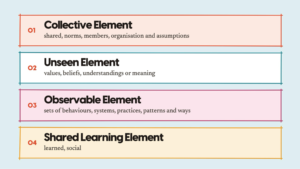
This means no team ever starts with a blank page.
“Culture isn’t something you create. It’s something you shape. It already exists, whether by choice or chance, default or by design.”
Employees build their own picture by observing. They look at onboarding, policies, internal communications and what the CEO and their team leader say, then use that to make sense of what they can’t see. When the two diverge, they notice.
This divergence is where cultural friction begins. To close the gap, Hatton suggests HR practitioners and managers break the work into six conversations, each designed to help an organisation turn its stated values into behaviour that people can see, practise and reinforce.
Six culture conversations to have
Each conversation has a practical move HR can put in front of leaders.
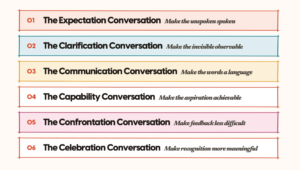
1. The expectation conversation
Most people carry a set of rules about themselves, others and the world that usually go unchecked.
Hatton quotes psychologist Tory Eletto: “What isn’t communicated is felt. What’s felt is interpreted, and what’s interpreted is often inaccurate.”
Hatton recalls speaking with an HR leader at a large retail brand about how her organisation had approached culture.
“For the past decade, we’ve always just assumed people will learn the culture by being in the environment,” she told him.
She likened culture to an iceberg: a small part visible above the water, and a much larger part below it, made up of unstated expectations, beliefs and rules that new starters had to work out for themselves.
The company’s shift came when it began saying plainly what it expected of people. She said the moment they started to highlight expectations, they “lowered the waterline”.

“Think about the biggest frustrations you’ve had in the last six months. I would suggest you could probably trace them back to a misalignment of expectations,” says Hatton. “The expectation conversation is essentially about making the unspoken spoken.”
HR action point: Build the question into a regular team meeting: “What do we expect of one another here that we’ve never said out loud?”
Give people a few minutes to jot down answers individually before sharing, so quieter voices aren’t drowned out.
Then sort what comes up into three piles: expectations worth keeping, those that need clarifying and those to retire. The latter pile matters more than you might think, because expectations that once applied but no longer do tend to linger – and those are worth interrogating.
2. The clarification conversation
Once expectations are on the table, the next challenge is that people attach different meanings to the same words.
Hatton likens it to the story of three blindfolded people feeling an elephant. One holds the trunk and says it’s a snake, one holds a leg and says it’s a tree, and one holds an ear and says it’s a fan. Everyone is touching a real part of the animal, and no one has the whole picture.
Organisations do the same with their values.
“We say we’re a very flexible culture, which means something different to IT, to HR and to frontline staff,” says Hatton. “Everyone’s holding onto a different piece of that elephant.”
The fix is to turn abstract culture ideas into everyday behaviour, he says.
“Great communication isn’t just an exchange of words. It’s a transfer of meaning,” says Hatton.
He calls the process “making the invisible observable”. If your company value is ‘connected’, ask what that means. It might mean people take an interest in each other. In practice, that might be eating lunch together, asking about life outside work or sticking around for Friday drinks rather than going home early.
HR action point: Pick one value and run a session with a mixed group of managers and team members from different functions.
For each value, ask: “What would you see, hear, say or do if this value were alive in our team?” Keep pushing past the first answer until the behaviours are specific enough.
Compare the answers across functions, because the differences show where the elephant is being described in different ways.
Then turn the agreed behaviours into plain-language descriptors and use them in onboarding, recruitment questions and performance conversations, so a value isn’t only a word on a wall.
3. The communication conversation
Hatton calls this one of the most overlooked opportunities for building culture. When his research asked what shapes a healthy culture, only about a third of respondents (32 per cent) said shared language plays a role. He thinks that’s a missed opportunity.
Hatton suggests introducing shared language/memes that are both meaningful and memorable.
“Memes that work well have two things in common: they need to be both meaningful and memorable. It can’t be one or the other,” says Hatton.
“They need to be personally meaningful to the people you’re leading, and memorable enough that they spread and get shared. A lot of cultures I see have neither. You ask, ‘What’s the culture like here?’ and everybody says something different, or they point to their values and it doesn’t really mean anything to anybody.”
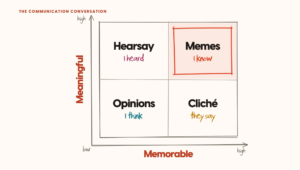
Memorable without meaning is a cliché, he says.
“Slogans are words on the wall. They’re posters. But memes become the language that we speak.”
One Victorian public sector leader Hatton worked with was caught between two tensions. She wanted her team to run with a strategy without pulling it apart, and she also wanted them to be innovative.
They landed on a musical shorthand: is this task orchestral or jazz?
“If the team knew this was an orchestral piece, they’d follow the plan. If it was jazz, that meant they could disagree, push back and suggest new directions,” says Hatton.
A single question now tells people how much room they have to experiment.
Hatton also points to Toyota’s ‘pull the andon’ meme, a cord any worker can pull to stop the production line over a safety concern.
“It’s an actual cord, and it stops the entire production line, and it causes the supervisor to come and do an additional safety inspection.”
The practice transformed Toyota’s safety culture, he says, and lots of other businesses took on this principle, says Hatton.
“These words outranked the manager,” he says. “If a manager says, ‘No. Keep going,’ and you pull the cord, production halts. It gave power to everybody in the organisation to take responsibility for their safety culture.”
Other examples of effective memes Hatton has come across are:
Amazon’s “disagree and commit”: This one answers a question employees often don’t dare ask: if I disagree in a meeting, do I say so now or wait?
Hatton explains that “everything that needs to be said is said in the meeting, and once the meeting’s done, we commit and we own this decision.”
Amazon’s “one-way door or two-way door?”: A one-way door is a decision you can’t come back from, so it deserves care. With a two-way door, employees know they can turn around and walk back through the door if they need to.
The question helps people judge how much caution a decision needs, and it gives them permission to act quickly on reversible ones.
Shopify’s “trust battery”: Hatton says people at Shopify ask each other, “What’s your trust battery at?”
“The whole idea that they say when you come into an organisation, your trust battery starts at 50 per cent and you’re charging – and it’s rechargeable – and you can also diminish your trust battery over time.”
HR action point: Start by listening for the phrases your people already use, in meetings, chat channels and hallway conversations.
Ask managers which short phrases they use to explain “how we do things here”, and gather the stories that go with them.
Next, consider the following: does it mean something to the people who use it, and would they remember it without a poster? Work with internal communications on this, because shared language spreads through repetition by leaders, in onboarding processes and in everyday channels.
4. The capability conversation
Clear expectations and shared language can fall flat if people can’t possibly do what’s being asked of them.
“It’s really unfair to hold someone accountable to something they’re not skilled or supported to do,” says Hatton. This conversation is about making the aspiration achievable.
It’s easy to skip, because organisations often assume that stating a value is enough. However, if ‘giving feedback early’ is an expectation, managers need to know how to do it. If ‘speaking up’ is the goal, people need to feel confident that doing so is safe.
HR action point: Take the behaviours agreed in the clarification conversation and ask, for each one, what skill or support it requires, and whether most people currently have it.
Ask managers directly where they feel least equipped, such as leading difficult conversations, giving feedback or recognising good work and design upskilling processes around this (courses, coaching, peer feedback, etc.).
Check back after a few months with a simple question: do people feel they have what they need to live out these expectations? If the answer is no, don’t treat it as a performance problem until you can be sure the right support and scaffolding is in place.
5. The confrontation conversation
This is often considered the least comfortable of the six. Hatton frames it around a single question: what is the worst behaviour we have tolerated?
The standard is set by what goes unchallenged, not by what is written down, he says. A leader who lets a high performer behave badly is telling everyone what behaviour they truly value – without even using their words.
“How do we start to address and make those hard conversations or feedback conversations just a little less difficult?” he asks. His answer is to confront behaviours early and kindly, before they harden into habit.
HR action point: Ask your leadership team an uncomfortable question: what is one behaviour we have let slide that contradicts what we say we value?
Treat the answers as the starting point for action. Then equip managers to raise concerns early, while the issue is still small.
Practising these conversations in low-stakes role play can help, as does making it clear that raising issues early is expected and supported.
“Great communication isn’t just an exchange of words. It’s a transfer of meaning.” – Shane Hatton, culture and leadership expert
6. The celebration conversation
The final conversation is the positive counterpart. Hatton’s research found that 43 per cent of respondents said a lack of reward and recognition contributes to an unhealthy culture.
His advice is to make recognition more meaningful, and to be deliberate about what it reinforces.
“Reward the behaviour that you want to see repeated.”
He suggests a simple test for leaders: “What was the last thing you rewarded and recognised on someone on your team? If everyone in your team did more of that, would you be happy with the kind of culture it created?”
HR action point: Audit the past few months of awards, shout-outs and promotions and ask whether they celebrate the behaviours you’ve defined as important or only results.
Make recognition specific by naming the behaviour and its effect, for example “you asked a question that changed our approach”, rather than a generic “great job”.
Encourage peer-to-peer recognition alongside manager-led recognition, and ask leaders to share what they last recognised in their weekly meetings.
Over time, the pattern of what gets recognised becomes a clear signal of what the organisation values.
Culture is a shared job
At a recent HR event, Hatton was asked how to stop culture becoming an HR project. Interestingly, in his research, HR did not feature among those people named as owners of culture. That is a useful position to start from.
Culture doesn’t need a single owner so much as a set of leaders who know which conversations to have, and HR is well placed to equip them.
The test, says Hatton, is whether those conversations happen in practice.
“How do we make our expectations clear in terms of observable behaviours we can live out every day? How do we make those words a language, not just posters on a wall? How do we upskill people to deliver on what we expect of them? Then challenge things kindly and early when we get it wrong, and celebrate them when we get it right. That’s where we can have an impact on organisational culture.”