
AHRI sat down with Shruti Ganeriwala, Chief Human Resources Officer for Unilever ANZ and APAC, to learn how her intentional moves across different HR lanes have set her up for a global HR leadership position.
Ten years ago, when I rejoined Unilever in Australia, after having worked in its Indian offices earlier in my career, I knew I wanted to be its Chief HR Officer one day.
I’d just moved from India to Australia and reached out to the HR team to see if they had any available positions. I was able to join the team, initially in a parental leave cover position.
I asked my line manager, the CHRO for Unilever ANZ at the time, for her advice on the steps I should take to make my dream come true.
Through a series of honest conversations, she highlighted my lack of experience with the supply and manufacturing side of the business. She said: “Your ambition is to be the CHRO, but you only know half the business. You’ve worked closely with the commercial teams, but half of our business is in manufacturing. To be a great CHRO, you need to understand all facets of the business.”
At the time, I wasn’t overly thrilled with the idea of moving out of the commercial part of the business, but I took on her advice.
Looking back, I’m glad she gave me that nudge, it helped me to pause and re-evaluate. Becoming an HR leader demands expertise that’s both broad and deep, and also it requires you to step into roles that might be out of your comfort zone.
These roles are fundamental to developing a well-rounded understanding of the business – which is a critical precursor to stepping into any leadership position.
This lesson has become a through-line in my career: be prepared to reflect on where you are, where you want to go, and stretch into the unknown. That’s how we all grow as professionals and as people.
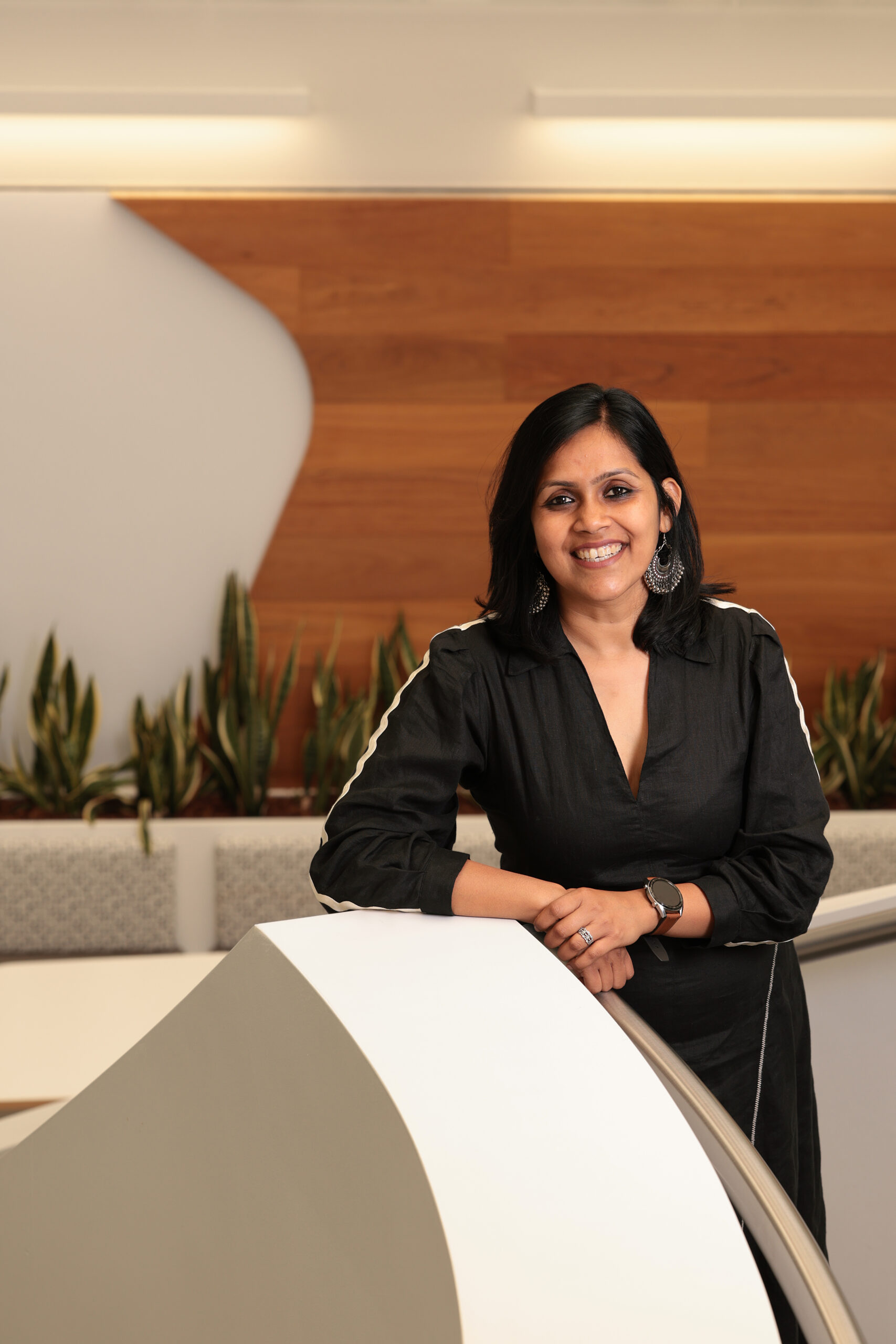
Shruti Ganeriwala – CHRO – ANZ & APAC, Unilever. Picture: Dylan Coker
On being a strategic advisor and a challenger
I believe HR has a massive role to play in not just being a confidante to business leaders but also being the challenger who provokes uncomfortable questions.
I remember working with a business leader to address concerns of inadequate career development for some senior leaders. One of the struggles of operating in a global business is that opportunities to progress in senior roles may only exist overseas.
To further compound this, many of our senior leaders were reporting to leaders outside Australia.
The business leader and I decided that, irrespective of the formal reporting lines, we were responsible for the careers of our senior leaders and should have meaningful career conversations with every senior leader in the business and work with them to craft an individualised career path with bespoke support.
As we were about to kick this off, a large global organisational restructure was announced. This was a significant change and meant that we didn’t have enough clarity on the future design of the local organisation.
We debated whether this was the right time to have these career conversations. While there was a view that we should pause until we had more clarity, I strongly believed it was even more important to have these conversations during a time of change.
We finally agreed, and the experience was amazing. It allowed us to hear our people’s career aspirations and work with them on a bespoke plan. Sometimes HR has to help leaders feel comfortable being in situations where they don’t have clarity and being able to stand up in front of teams and say, “I don’t have the detail yet, but I can be transparent with you.” That’s how we build trust with employees.
I strongly believe that HR is a powerful ally for leadership success. We are not only helping deliver a business strategy, but also playing a key role in helping leaders be successful, especially in times where they are navigating increasingly complex roles, making decisions in ambiguous environments and experiencing shorter change cycles.
Enhance your credibility and gain the skills you’ll need to take your next step into a leadership position with the HR Certification program.
On navigating global environments
As an HR team operating in a large, global matrix business, we have the best of both worlds. We get to pick up and implement the amazing initiatives designed in our London head office, resourced with larger HR teams and expertise roles, but we’re far enough from the global centre to have the licence to trial different things.
Case in point being the four-day week trial (4DWW) we did a few years ago. This was an initiative we chose to trial for the ANZ region.
The trial pushed us to work more efficiently, challenge the standard norms and be really thoughtful about how we spend our time. We have now evolved the 4DWW into an everyday flexibility model with autonomy and flexibility at the heart of our ways of working.
“I believe HR practitioners need to balance the pendulum between protecting and serving the business.”
Another key aspect of my role is managing dispersed, diverse workforces across the ANZ and APAC regions. I’ve learned the importance of being open to the differences that these rich, diverse cultures will bring to the team – and how those differences might manifest.
For example, we’re currently revamping our HR operating model. By using bespoke generative AI-powered chatbots trained on Unilever’s policies and procedures, we’re introducing efficiency and simplicity into HR.
This frees up time for HR business partners from answering operational questions, so they can focus on more strategic work. Part of this model has been training my HR teams to get comfortable in saying ‘no’ to leaders, and directing them to Una, our AI chatbot.
Landing this model in APAC has been interesting. In ANZ, which, broadly speaking, has a non-hierarchical culture, people have adapted quickly.
In other countries with more traditional hierarchical structures, the experience has been slightly different. It’s also been quite hard for some of our junior HR team members to say ‘no’ to business leaders because of expectations around being timely and responsive to senior stakeholders.
That experience taught me the importance of learning about cultural differences and mindsets as you design HR strategies.
On pragmatic HR practice
I believe HR practitioners need to balance the pendulum between protecting and serving the business – protecting HR processes, ensuring they are fair and equitable, and serving the business needs.
I always say to my HR team that finding the right balance between protecting and serving is really important – and that pragmatism sits in the middle of this.
Some HR practitioners, especially early on in their careers, will be very much on the serve side because you want to do things well and quickly, and build credibility with your stakeholders.
However, you also have to be able to push your leaders to look at the bigger picture and protect the right people processes – which can sometimes require tough conversations.
I believe true HR business partnering lies somewhere in the middle of this pendulum. This is the pragmatism element – understanding the business needs, but not being obsessed with processes, and instead adapting this to what makes sense at that point in time.
A longer version of this article first appeared in the Dec/Jan 2026 edition of HRM Magazine, exclusive to AHRI members.


