Tight budgets and the rising cost of living are making remuneration conversations more complex. Use this visual guide to help managers navigate them with confidence.
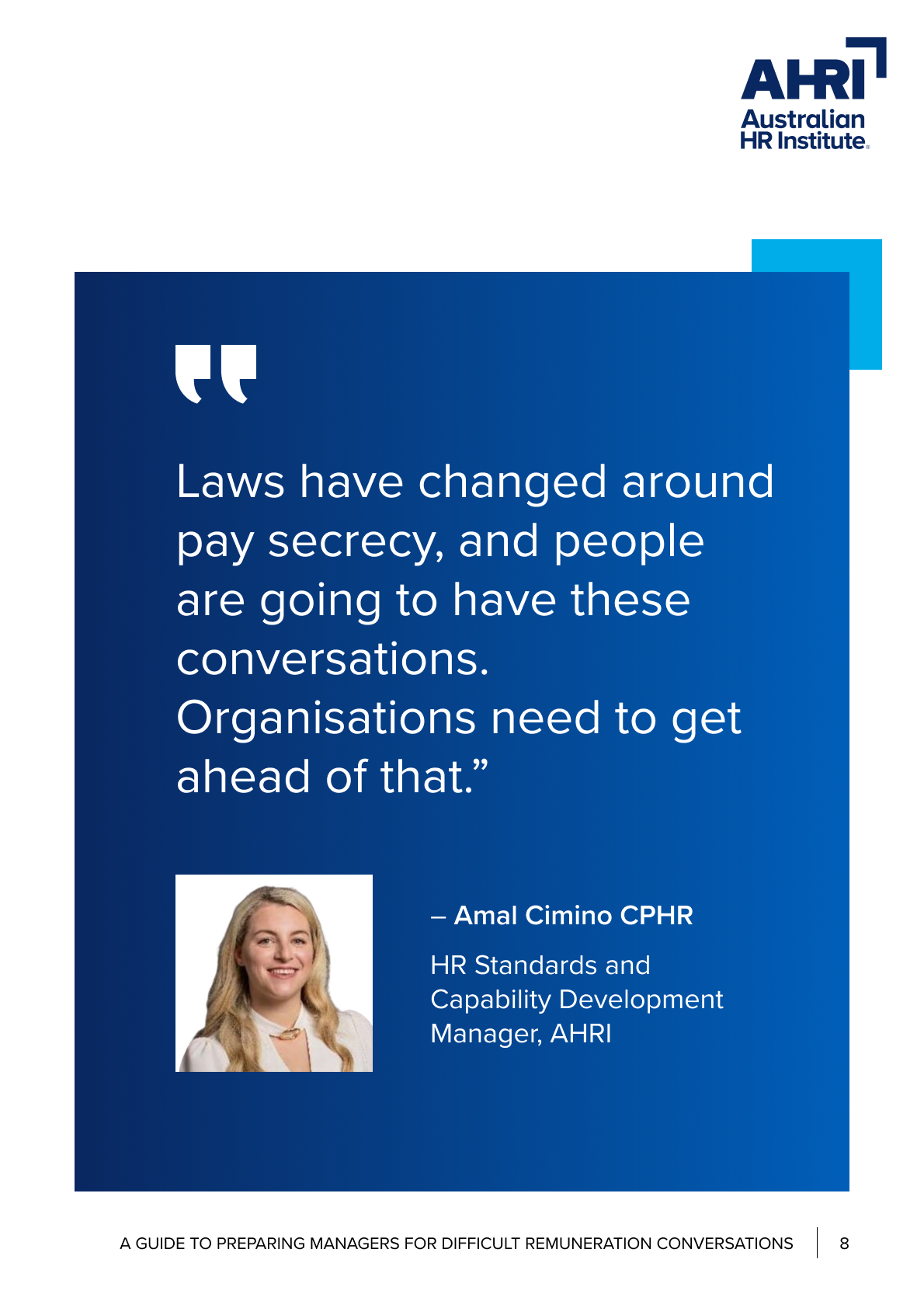
Talking about pay has always been difficult. But when organisations are contending with cost pressures, rising employee expectations and the end of pay secrecy, those conversations can become even more challenging.
During salary review season, managers are often asked to explain decisions they have little or no control over, and have to contend with disappointment, frustration and complex questions from employees.
As the end of the financial year approaches, it’s therefore crucial that managers are thoroughly prepared for these conversations and the various ways they could go.
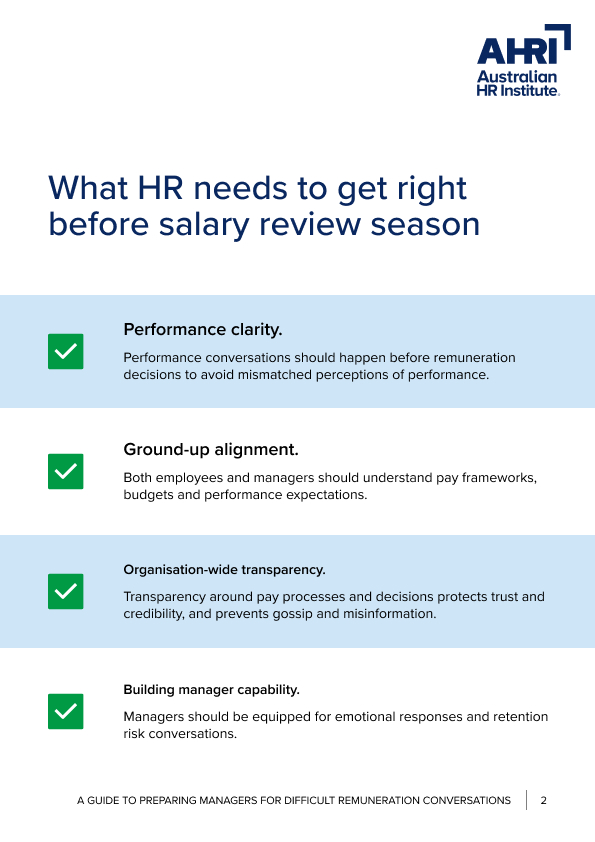
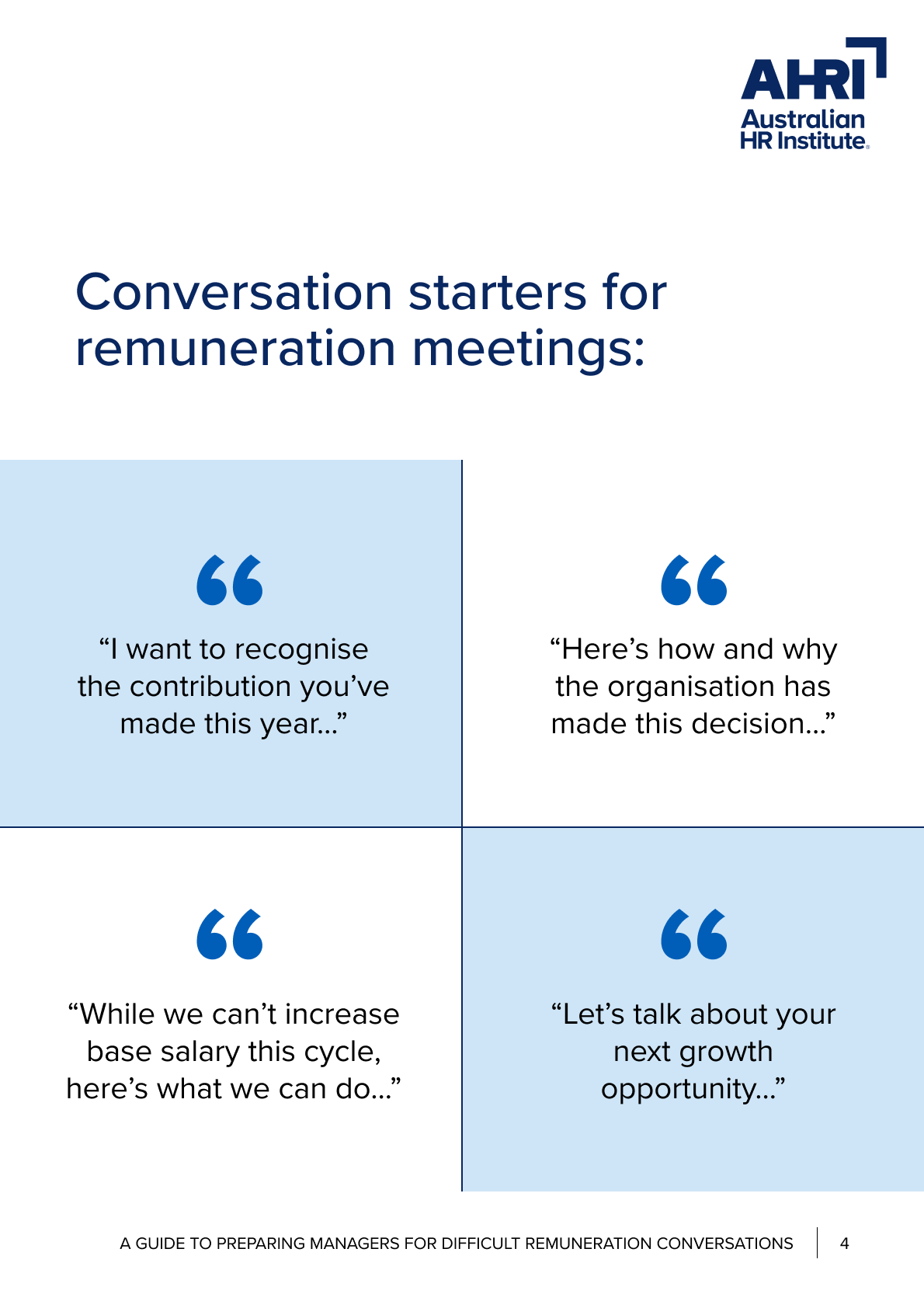
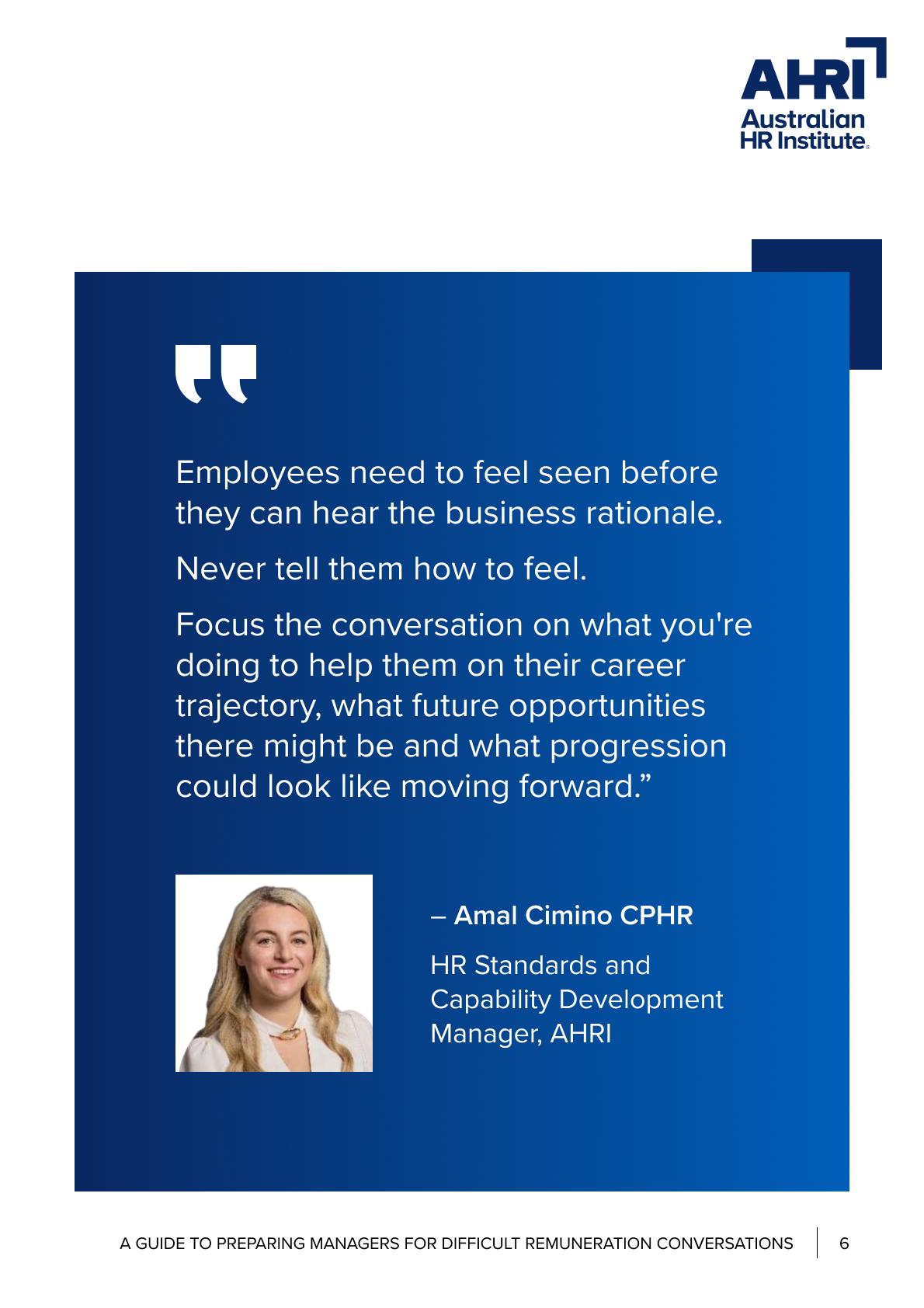
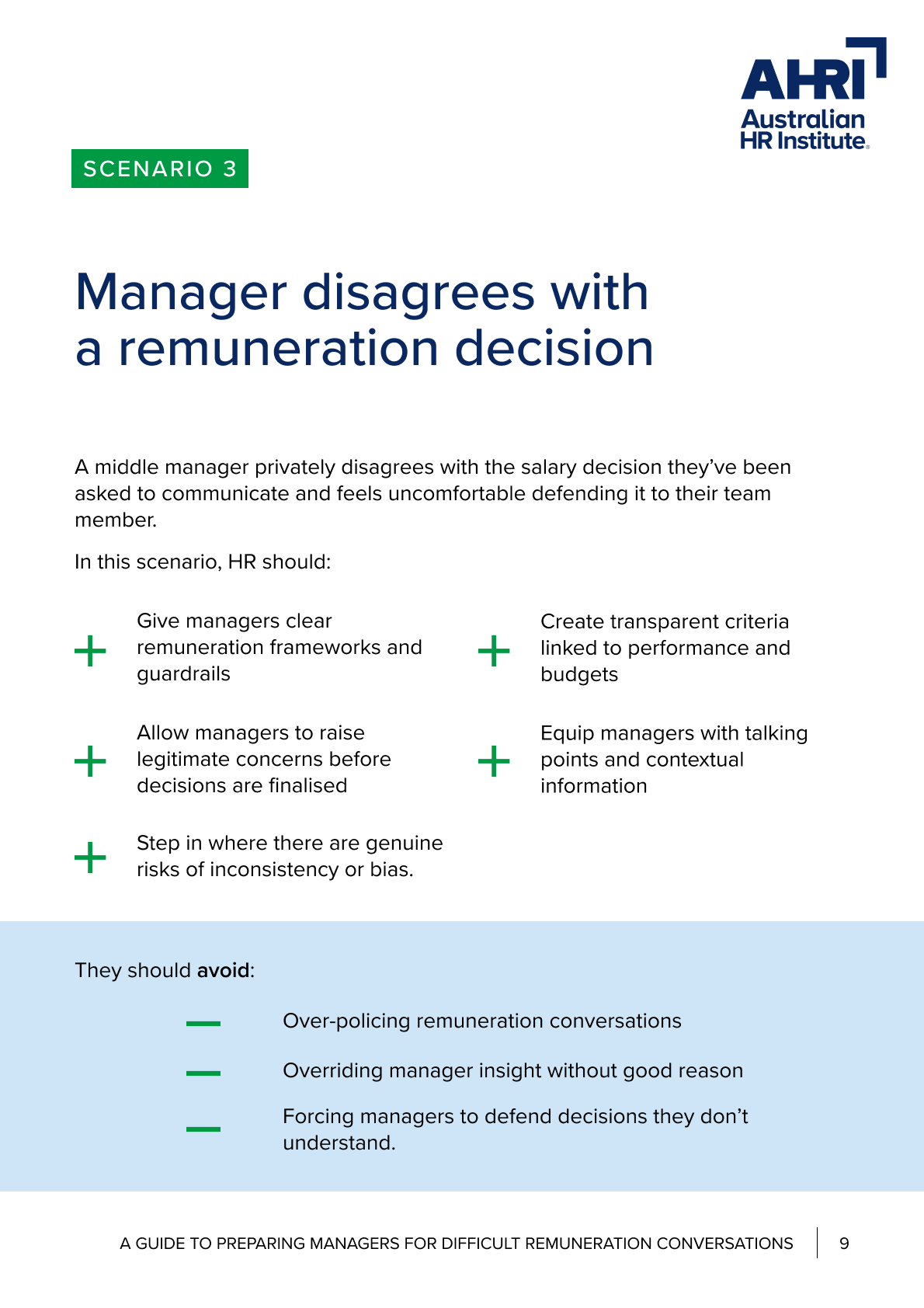
HR’s role in this preparation includes ensuring remuneration frameworks are clear and consistent, aligning performance discussions with pay decisions and equipping leaders with the confidence and capability to respond with empathy and honesty. Managers need the specific language, context and guardrails to explain decisions credibly.
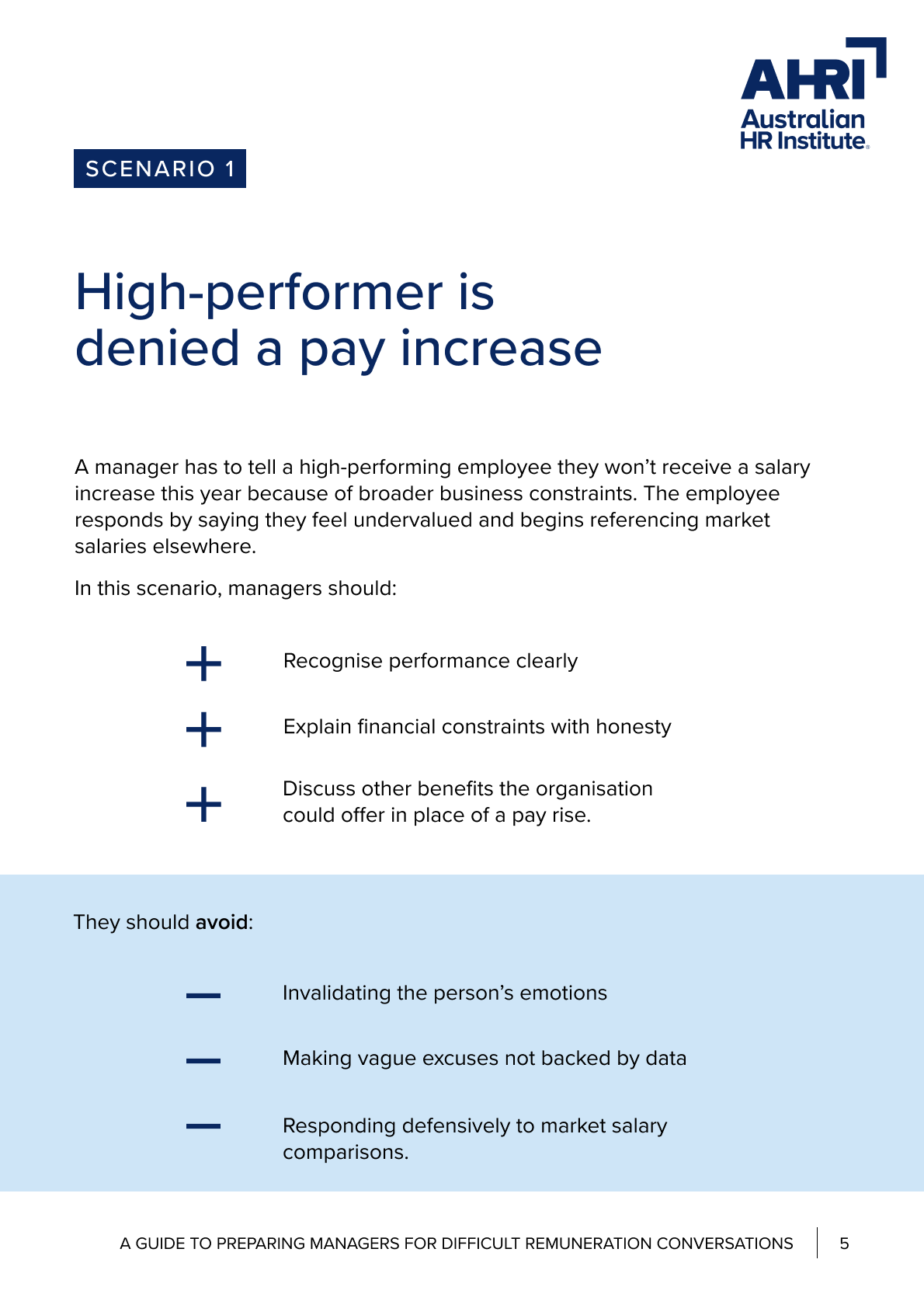
This resource outlines the foundations HR needs to help managers get right before salary review season, as well as practical techniques for coaching managers through common scenarios.


Download a printable version here.
Other things to keep in mind
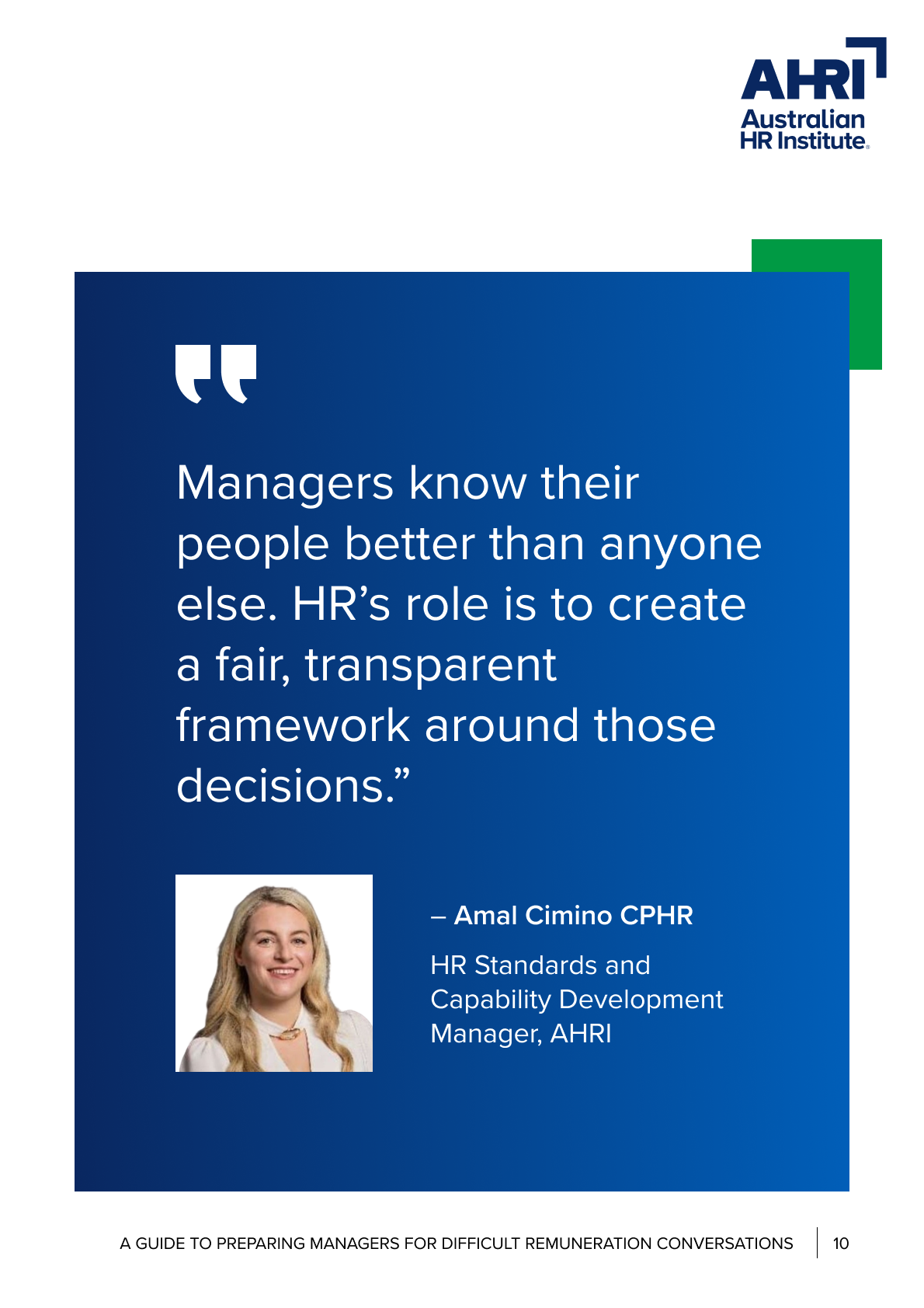
Amal Cimino CPHR, AHRI’s Capability and Development Manager, shares the following considerations to keep in mind.
- The HR governance lens
While equipping managers with the right language and mindset is essential, HR’s governance role is equally critical. Before salary review season begins, HR should be running calibration meetings, pay equity reviews and bias mitigation checks to ensure consistency across the organisation.
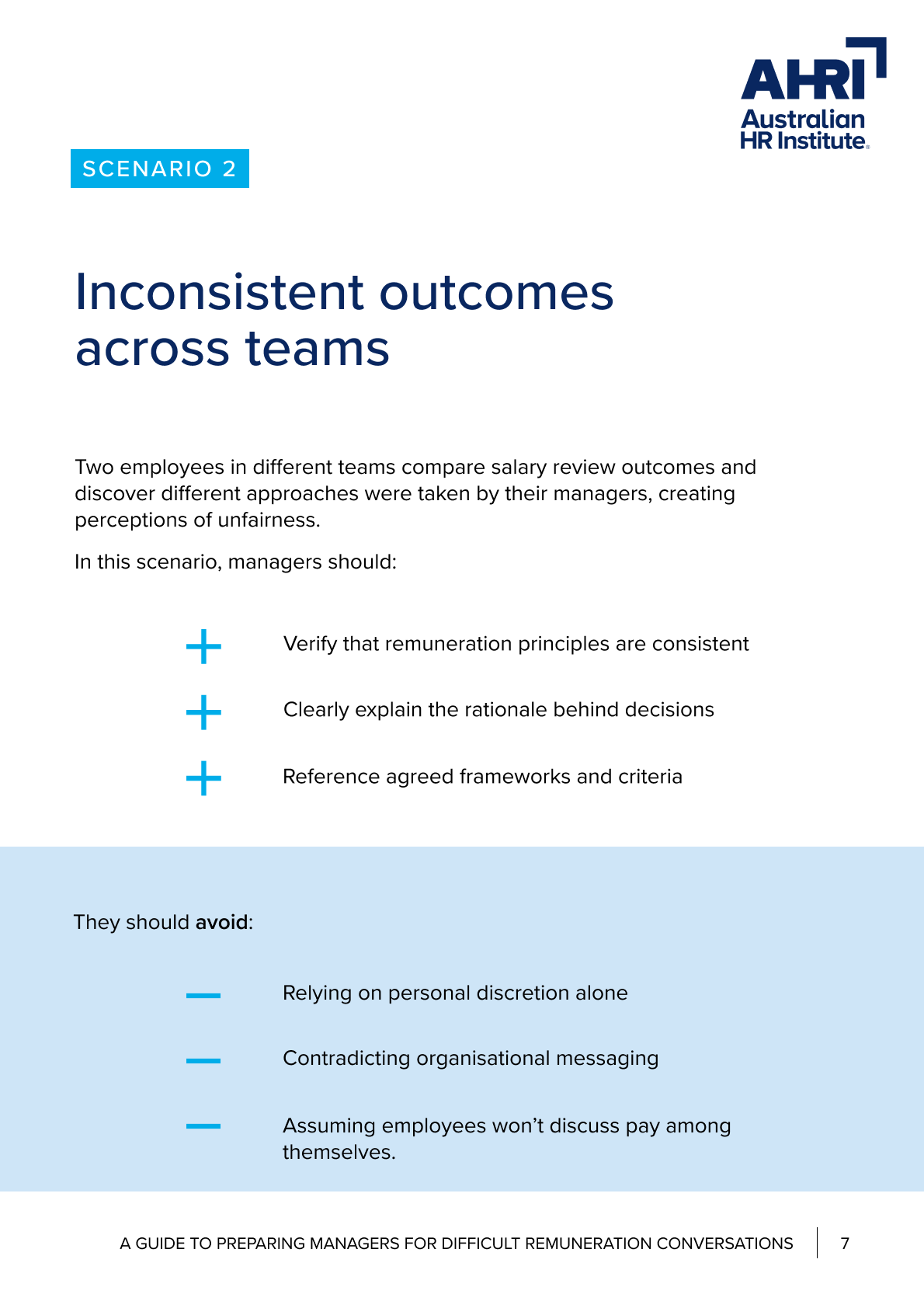
This groundwork is what prevents the most common complaint HR professionals hear from managers: “how do we stop inconsistent outcomes?” The answer lies upstream, in the frameworks, guardrails and alignment processes HR puts in place long before any difficult conversation takes place.
- When remuneration conversations become retention conversations
Salary review season is also when organisations are most exposed to losing their best people. When a high-performer signals dissatisfaction – or worse, mentions they’re exploring other opportunities – managers need to be ready to respond with more than reassurance.
HR should be equipping managers to recognise early departure signals and understand the stakes: replacing a key employee can cost tens of thousands of dollars, and the ripple effects on team capability and succession pipelines can be felt for months.
For critical roles, HR and managers should be aligned ahead of review conversations on what flexibility exists, whether that’s accelerated progression, project opportunities or retention arrangements, so they’re not caught out if questions arise during a salary discussion.
🧰 HR’s career resource toolkit
- Learning: Having Difficult Conversations – this course will arm you with the tools to effectively prepare, plan and conduct a difficult conversation and achieve the best possible outcomes while maintaining harmonious working relationships.
- Learning: Enhancing Your Coaching Mindset – by engaging in practical coaching scenarios during this immersive course, you will learn how to support and empower leaders and employees in developing their own problem-solving capabilities.
- Support: Become an AHRI member for access to Ask AHRI where you can receive expert HR guidance for challenging workplace issues.
- Video: Watch part one of AHRI’s new video series The Game Plan, where HR leaders talk about how they would navigate managers’ fears about getting performance conversations wrong.