With a suite of regulatory changes coming into effect this year, and more on the horizon, here’s how HR can prepare for key changes, from gender equality requirements to increased parental leave.
Employers are facing a number of regulatory changes this year, from new WGEA reporting requirements to Payday Super.
While not all changes require immediate action, many will play an influential role in longer-term workforce planning, governance and risk mitigation. Additionally, in many cases HR teams will need to ensure policies and internal processes are audit-ready well ahead of key commencement dates.
For HR, the 2026-27 landscape will require demonstrating tangible progress on gender equality targets, preparing for a potential surge in AI-assisted industrial claims and changes to work design in light of new work from home (Victoria only) and paid parental leave legislation.
Scroll through or download AHRI’s compliance calendar below to stay on top of key upcoming industrial relations reforms and understand what they mean for your HR strategy in 2026 and beyond. (Note: downloadable version includes links to useful resources).


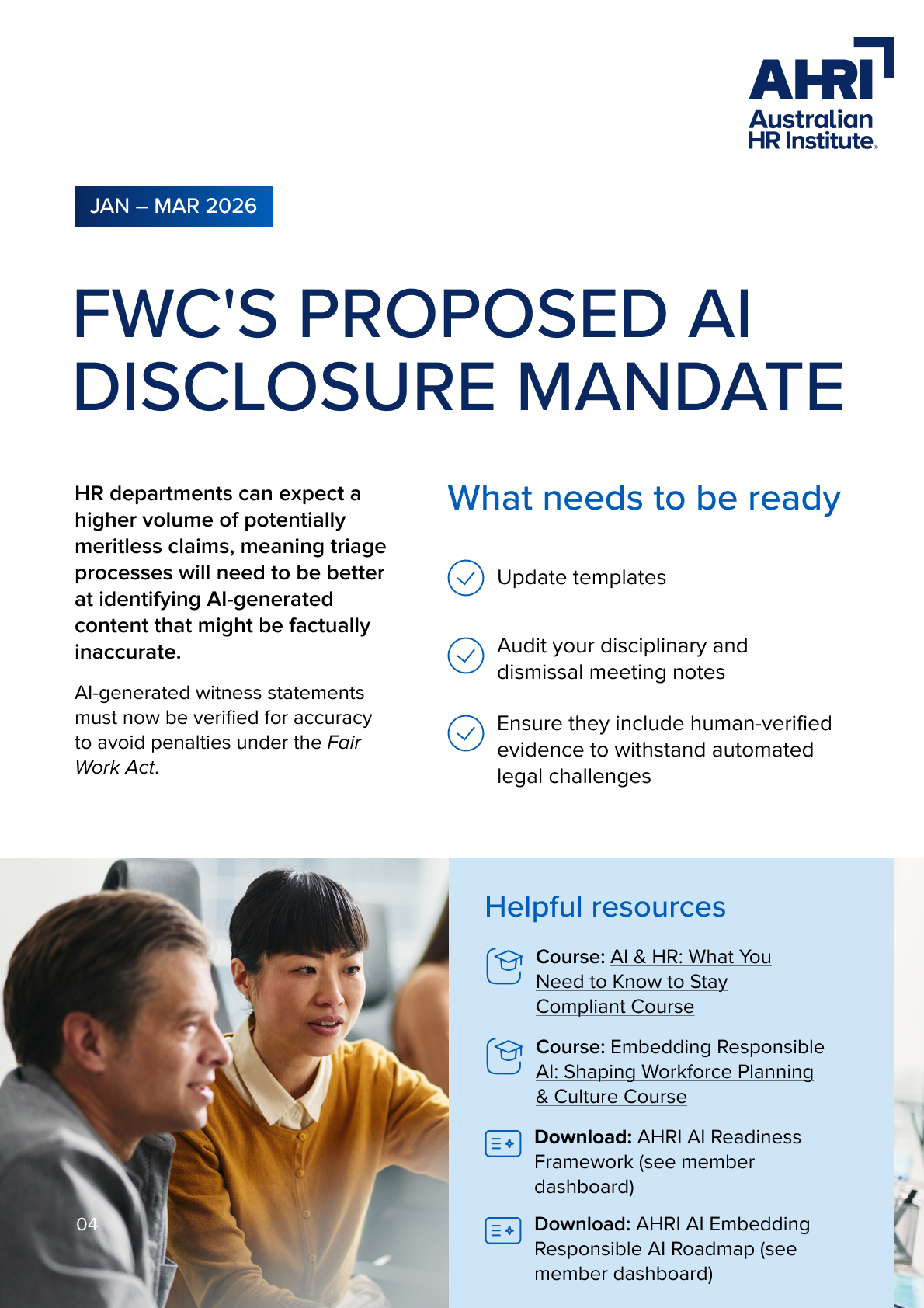
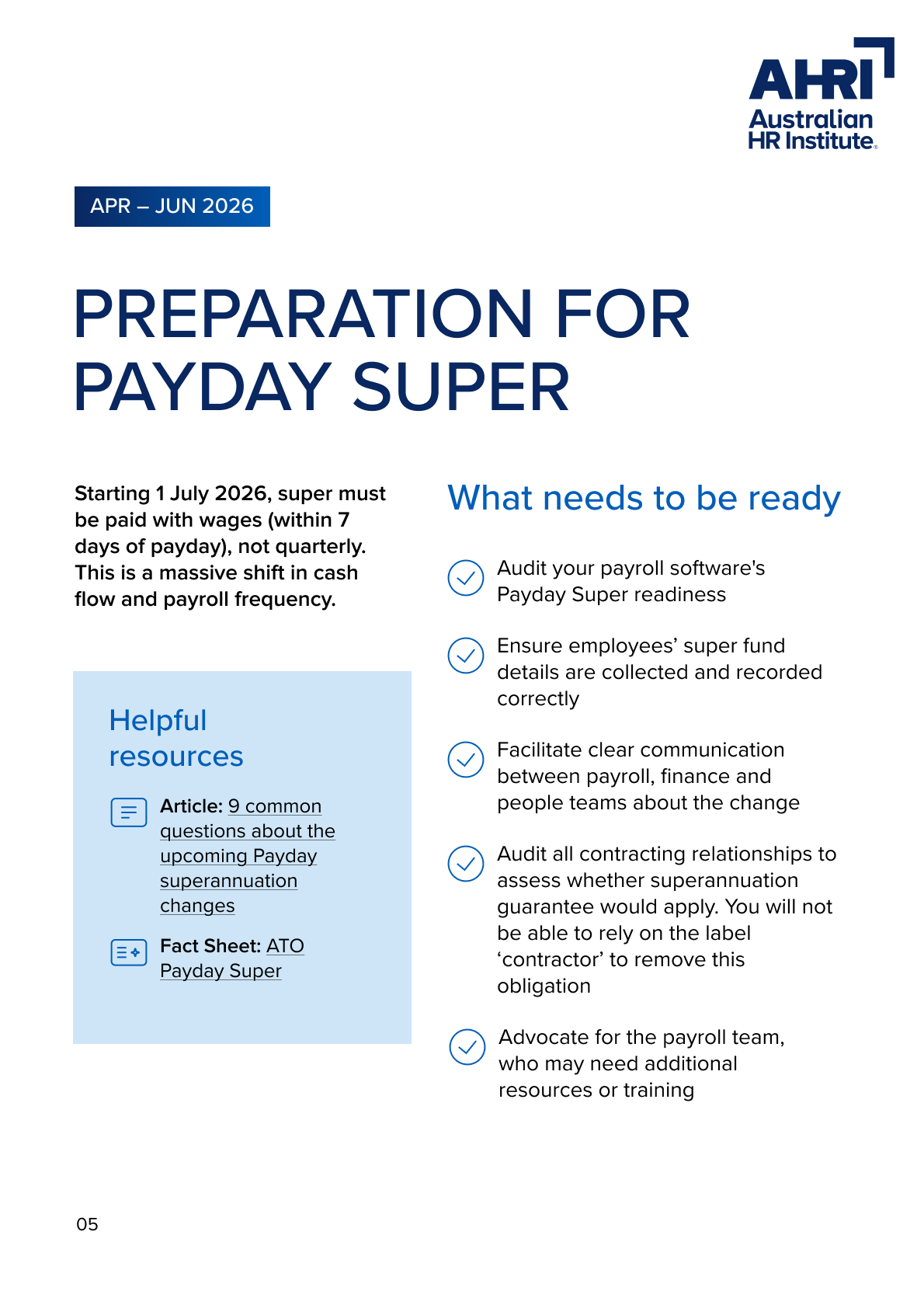
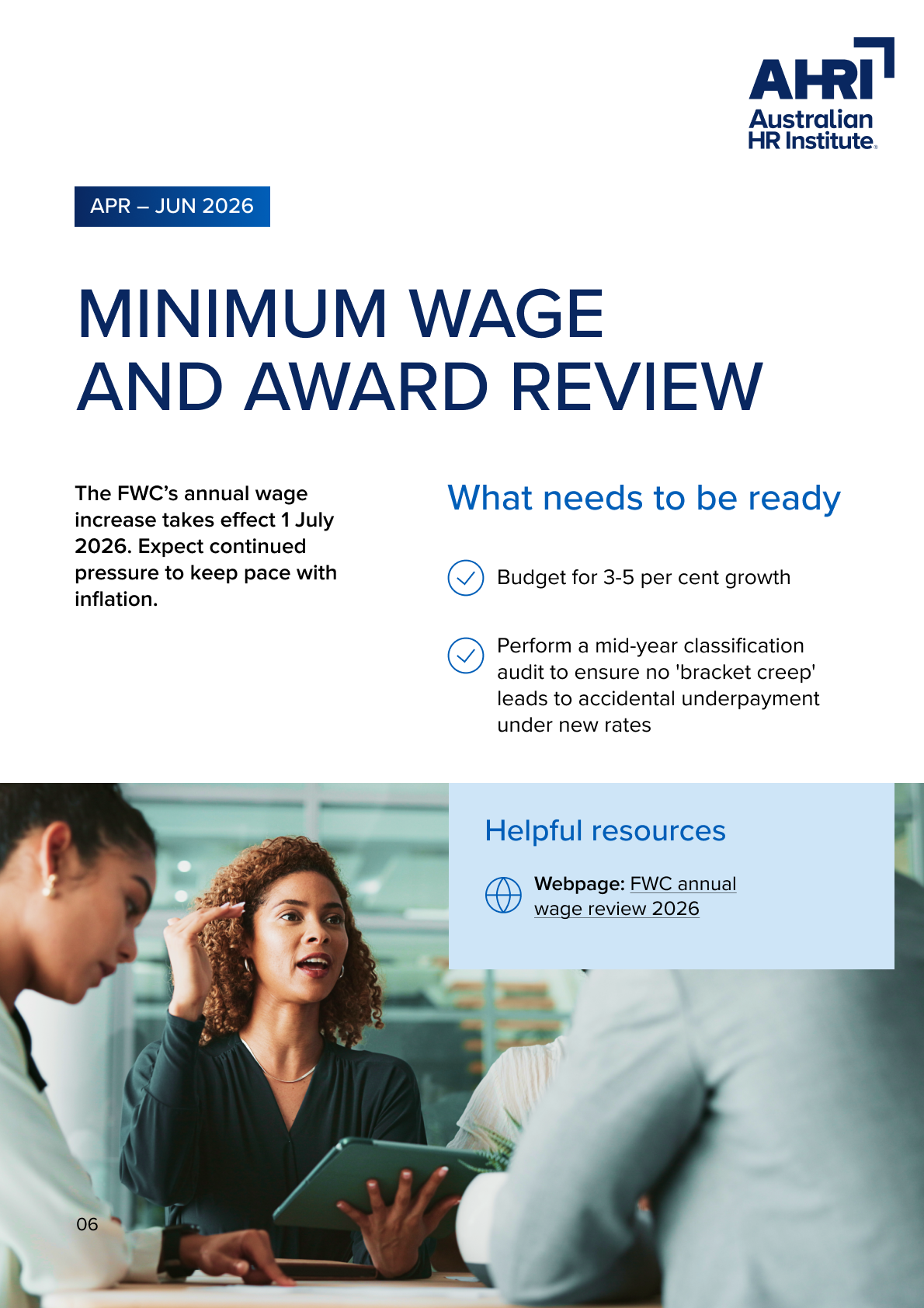
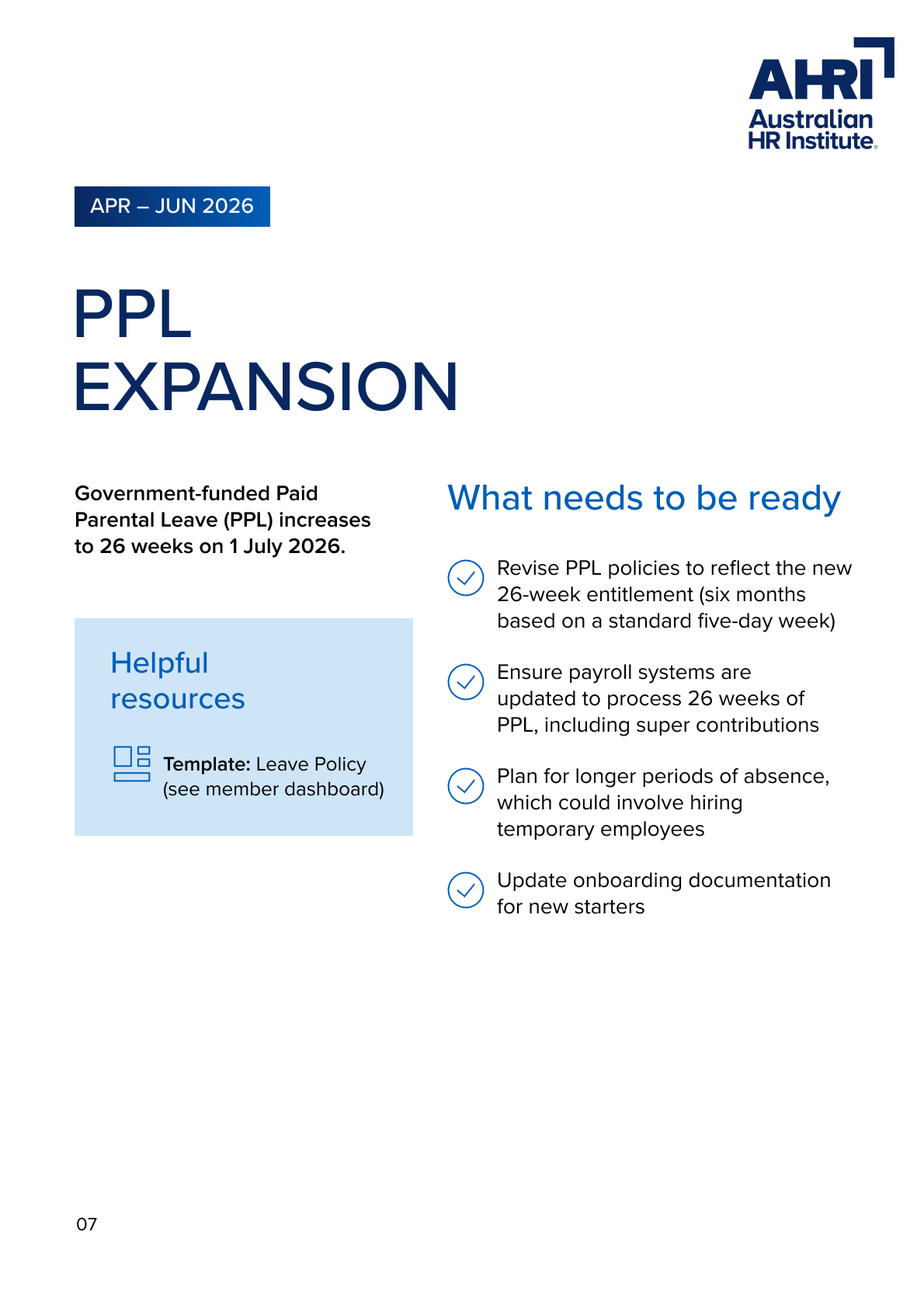
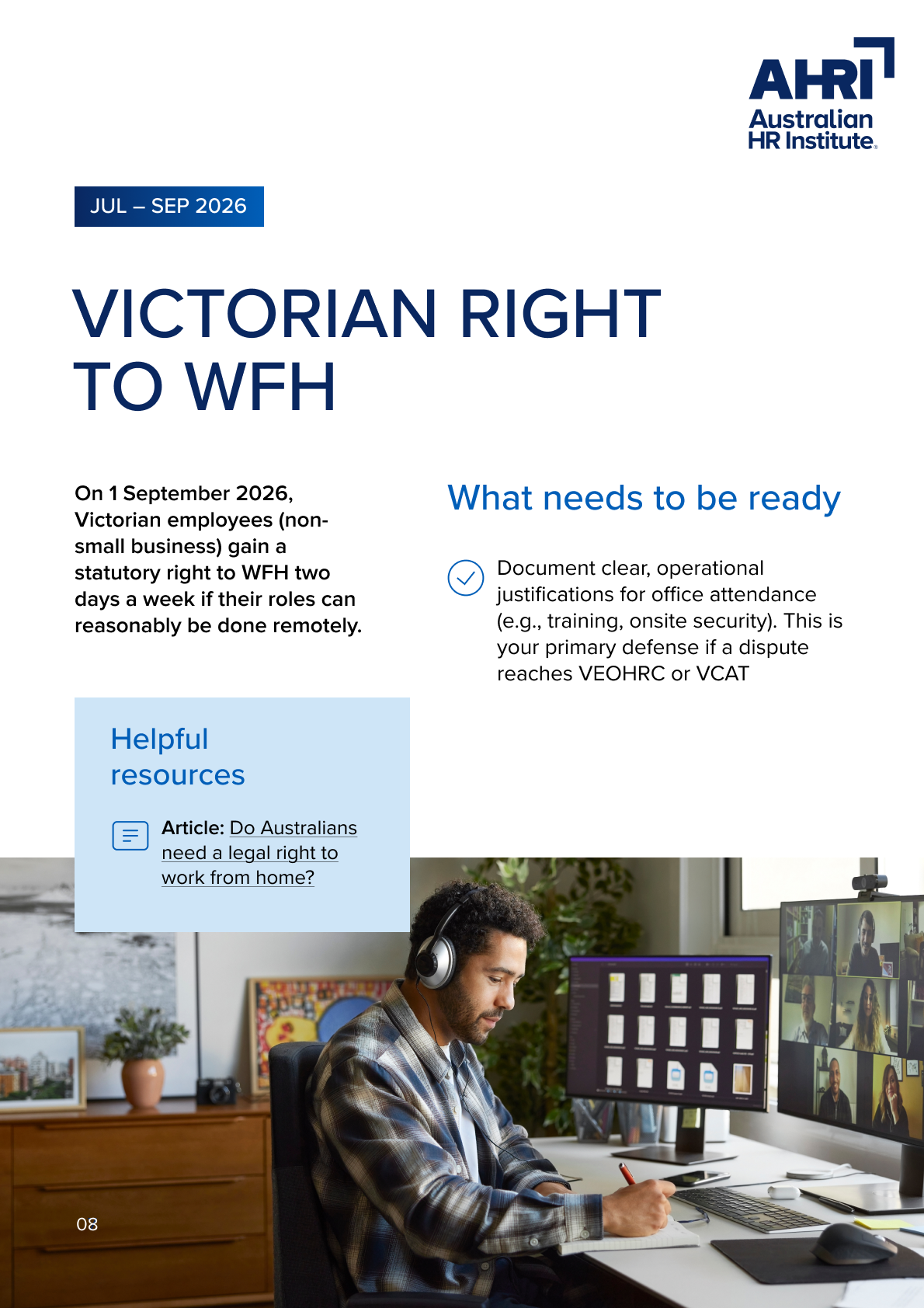
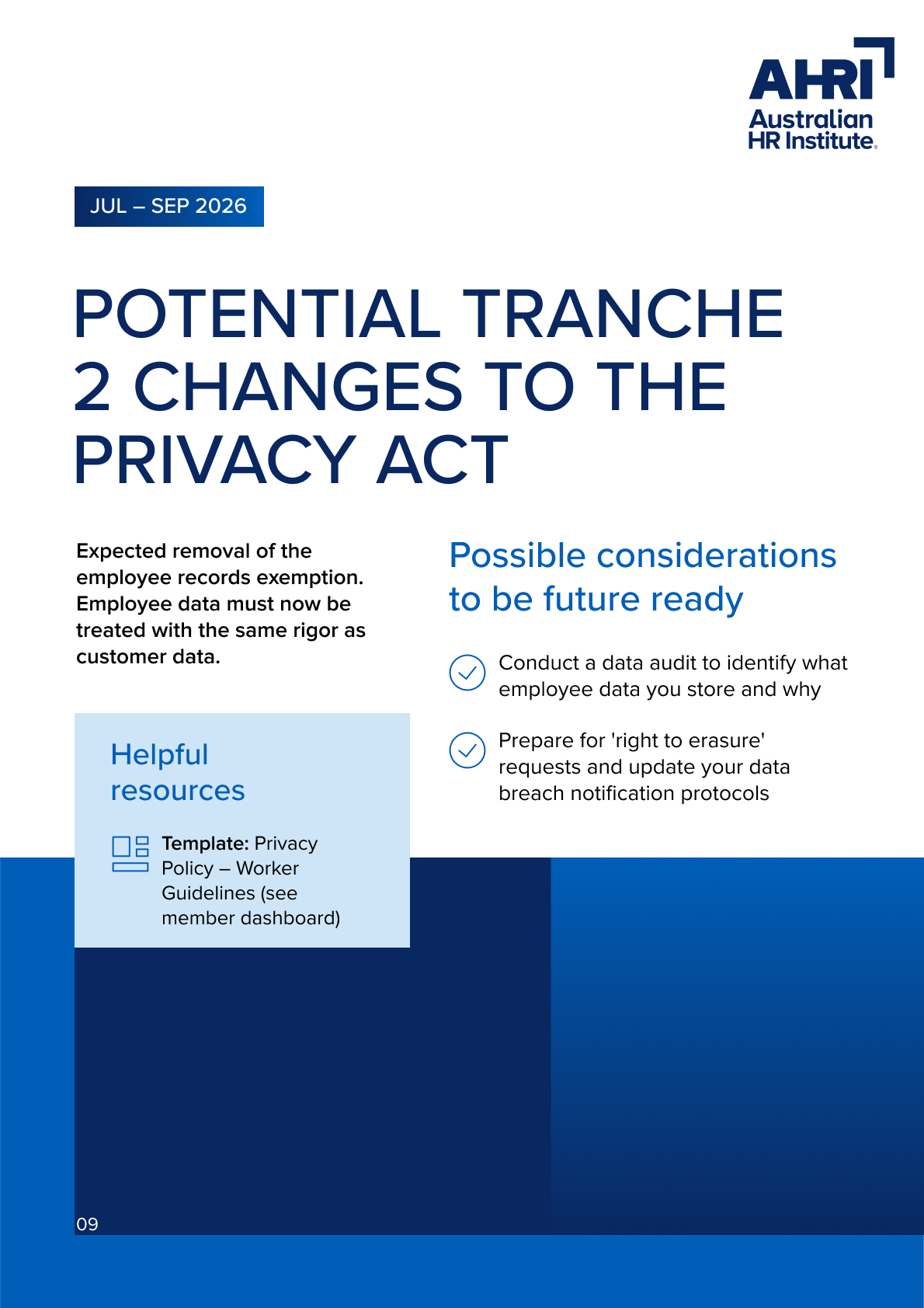
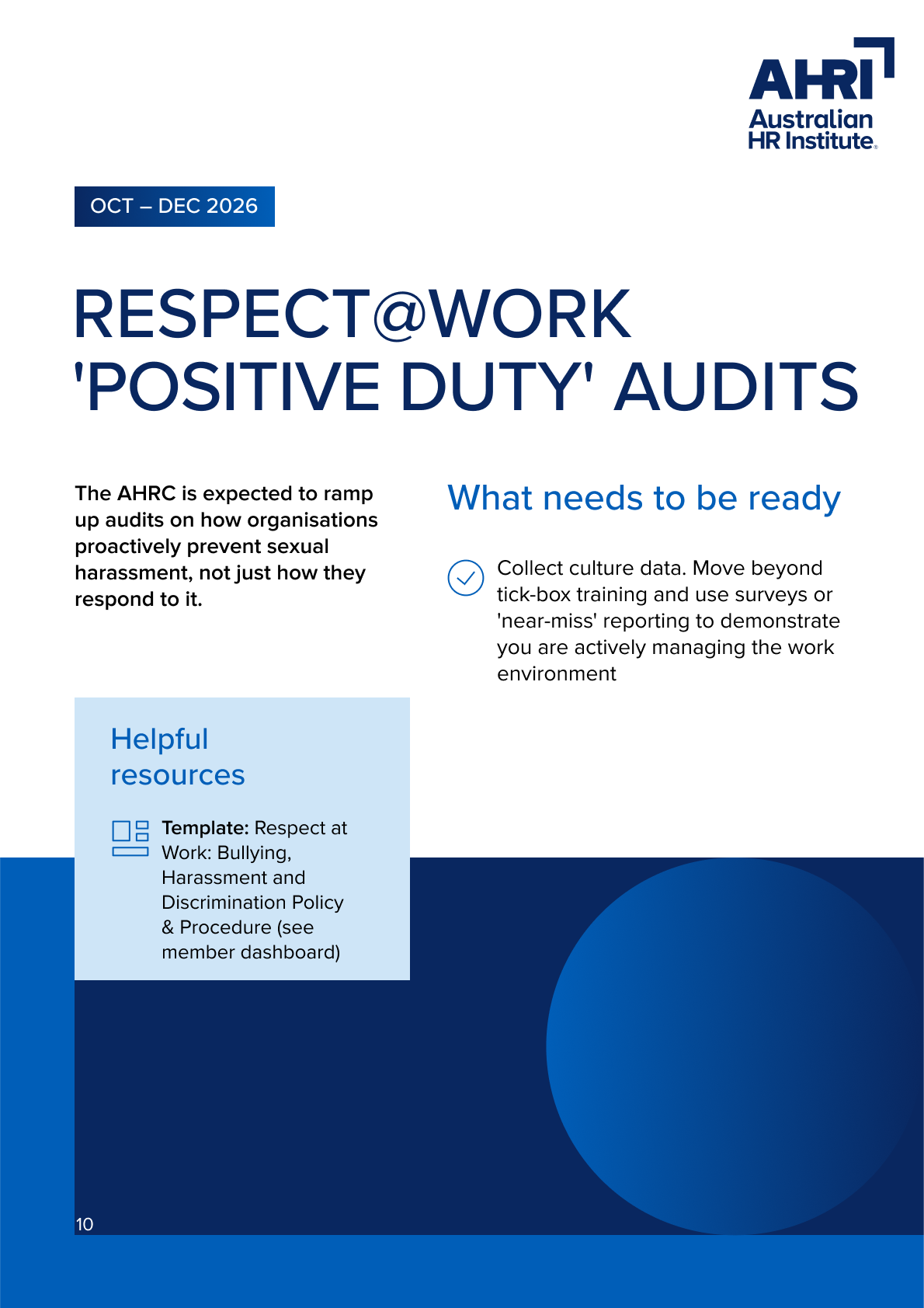
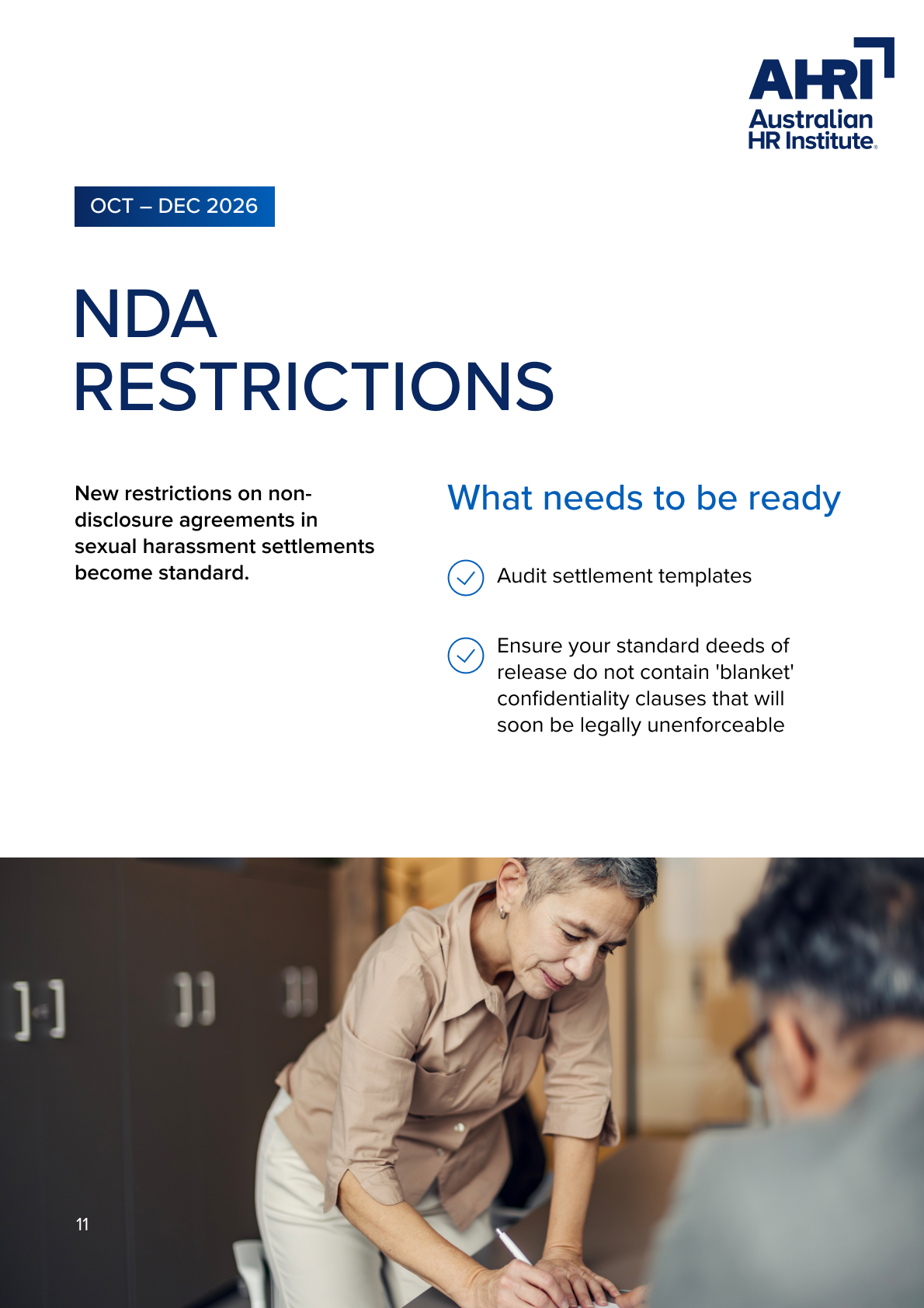
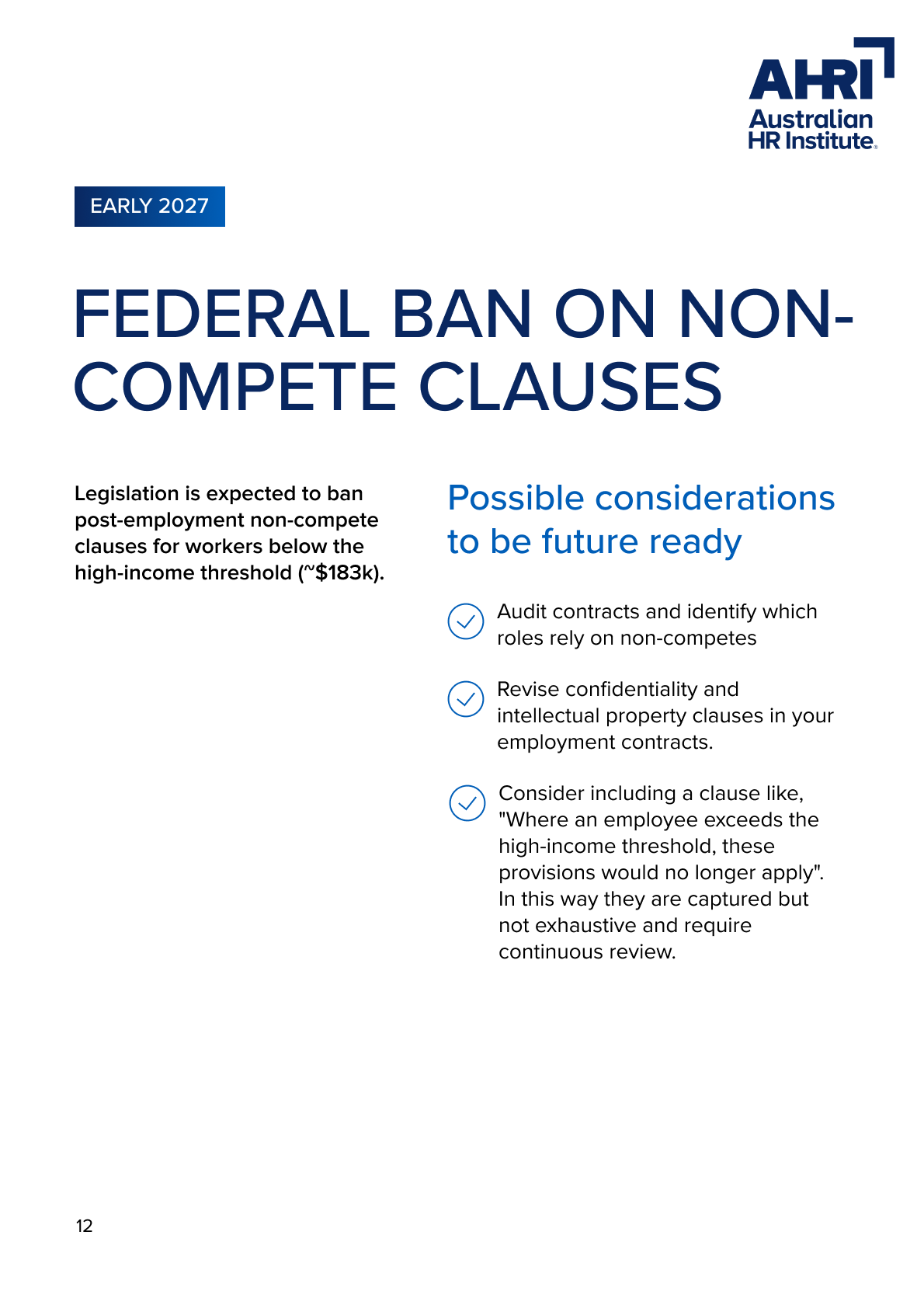
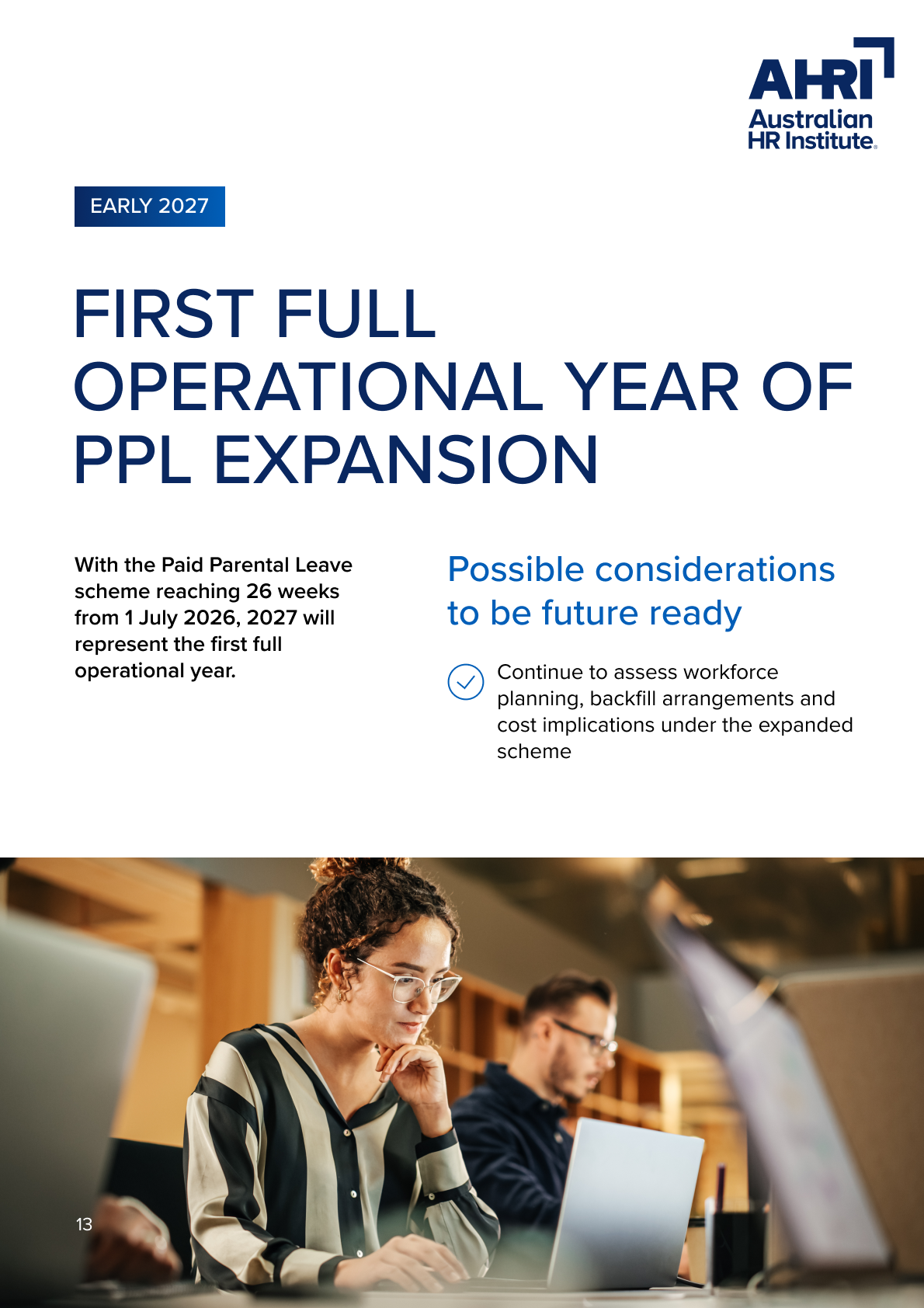
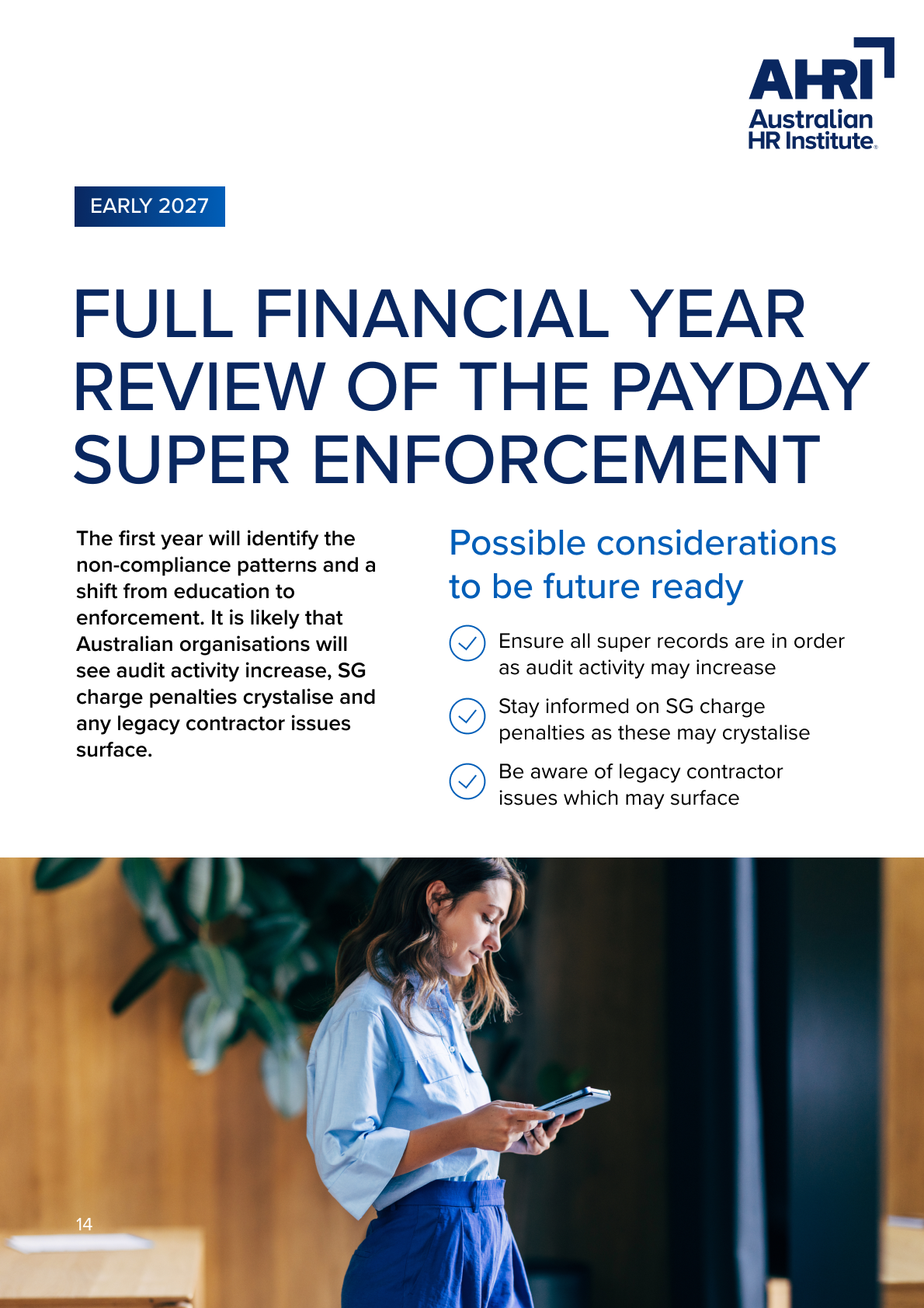
Download the checklist here to get useful resources.
This resource has been reviewed by the AHRI Assist team. For essential HR resources you need to stay compliant and effective, AHRI members can access AHRI Assist and Ask AHRI. Not a member? You can join today.
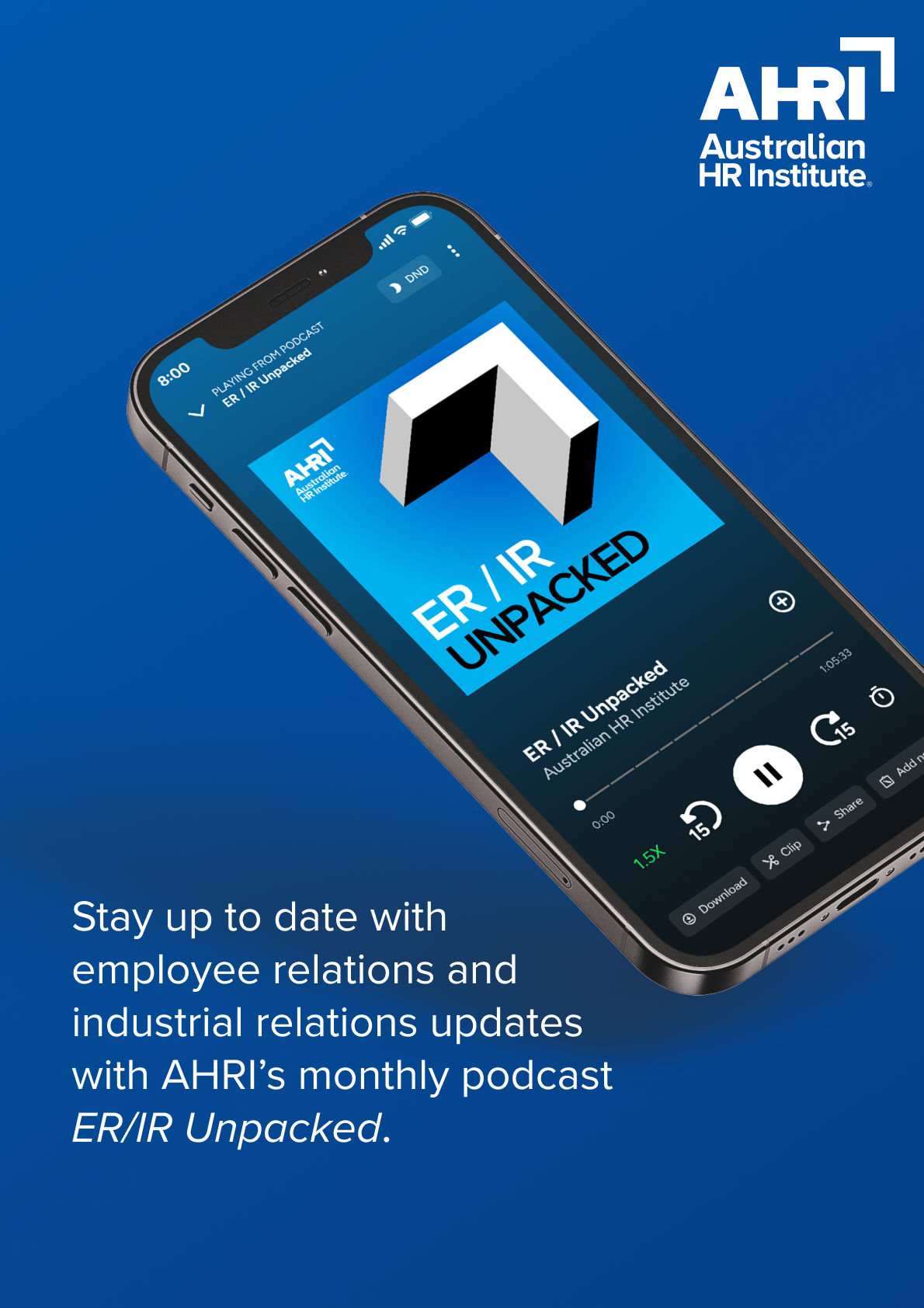
To find out more about important upcoming shifts in the world of employee relations and industrial relations, check out our monthly podcast, ER/IR Unpacked. Hosted by experienced HR and IR expert Jonathon Woolfrey FCPHR, each episode offers practical and timely tips for the modern HR practitioner.