
Co-creating expectations and having honest discussions is the key to productive feedback conversations, says this coaching expert. Download this guide to help managers tackle these five challenging feedback scenarios with confidence.
Having difficult conversations can be one of the most challenging aspects of becoming a first-time people leader. And when these conversations aren’t managed well, they’re often escalated to HR.
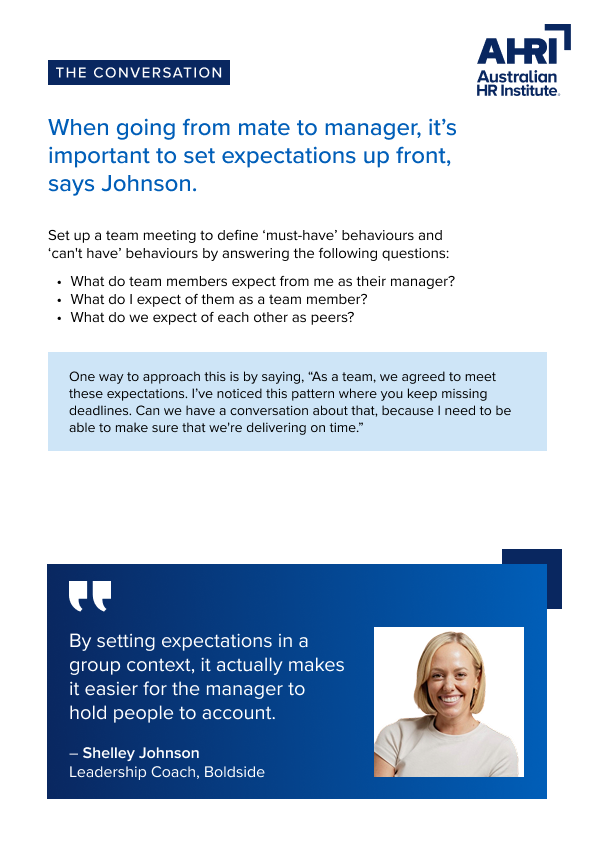
Many of these tricky feedback scenarios become harder than they need to be simply because expectations were never set clearly in the first place, says Shelley Johnson, leadership coach and founder of HR consulting firm Boldside.
“Managers need to be able to answer the question, ‘How do I set really clear expectations of my team?’ and ‘How do I have honest conversations when things haven’t gone well?’… If they can just do those two things, it would make a world of difference.”
Once clear expectations have been set, coaching managers on how to approach and handle different feedback situations can help them turn conversations fraught with tension into constructive moments for collaborative learning and growth.
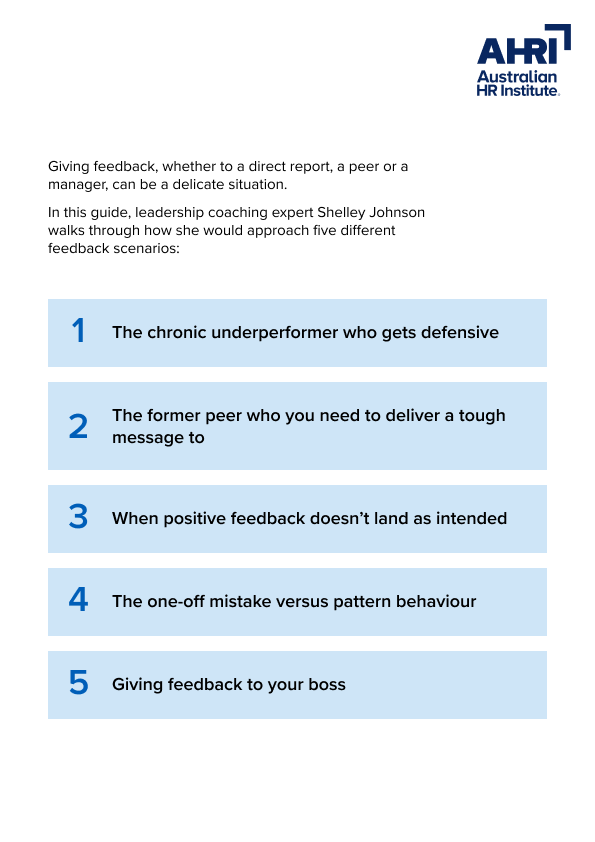
In the conversation guide below, Johnson unpacks how she would coach managers to respond to the following feedback scenarios:
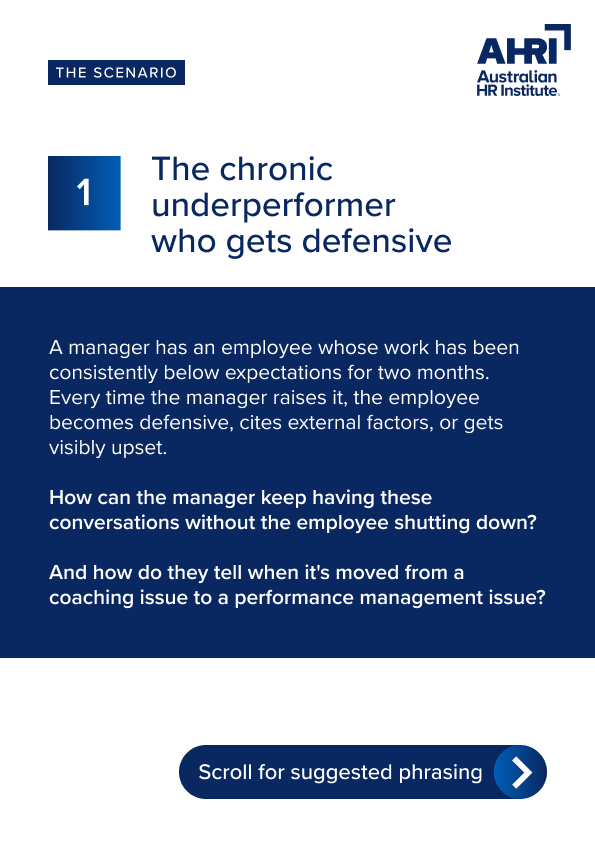
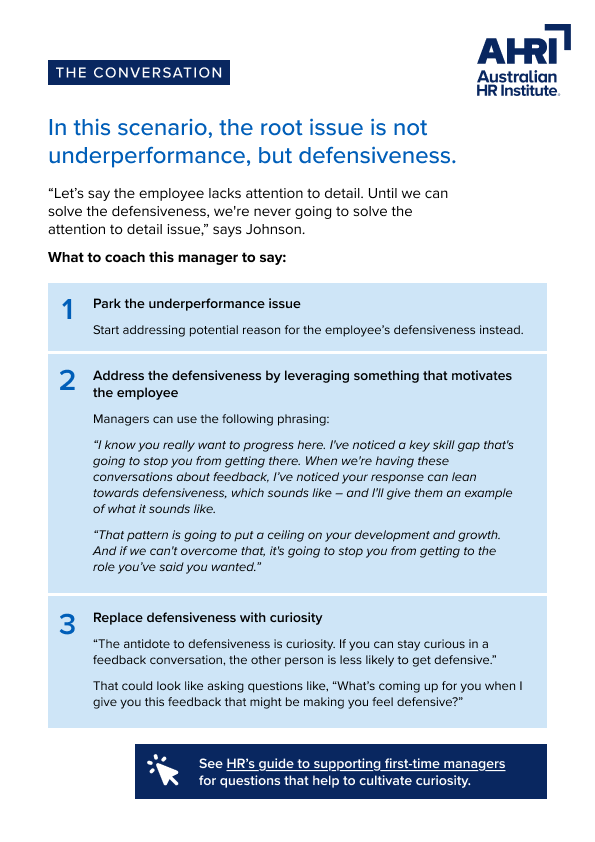
- The chronic underperformer who gets defensive
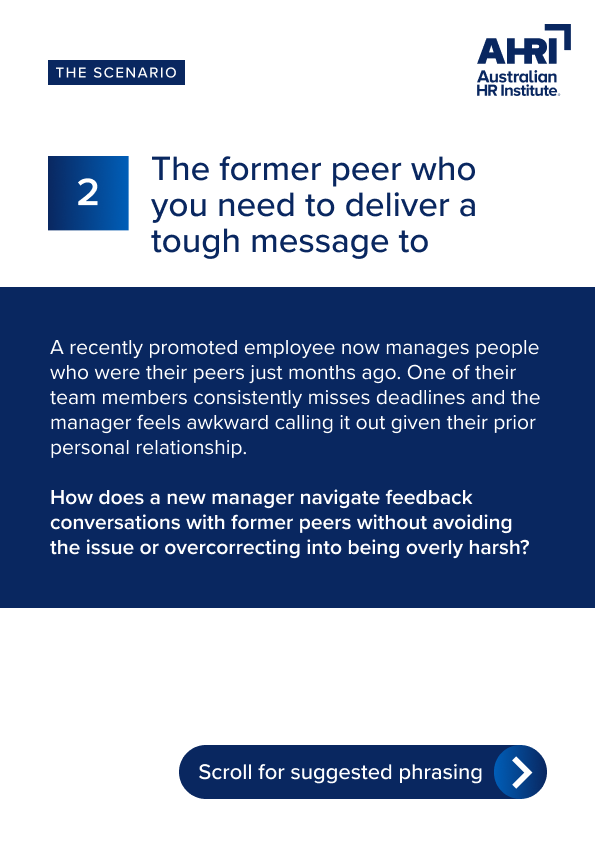
- The former peer who you need to deliver a tough message to
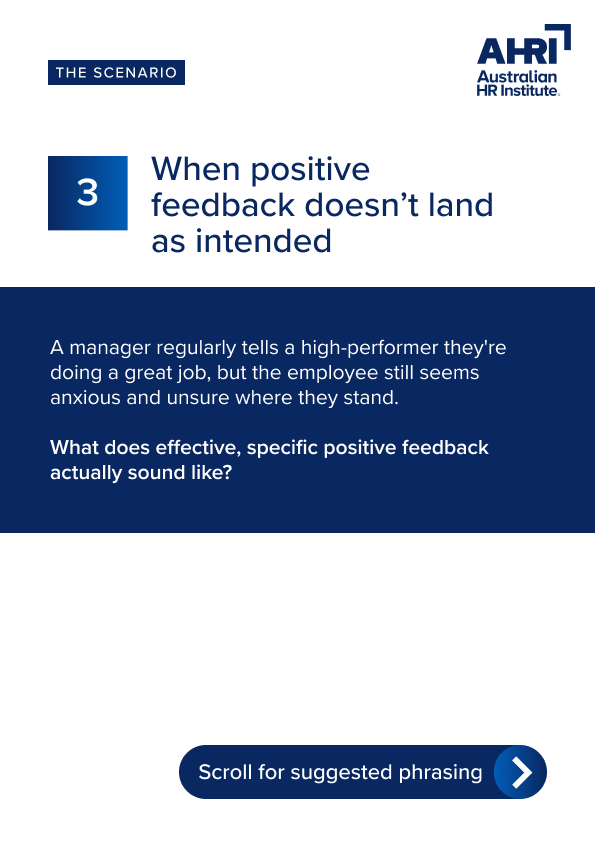
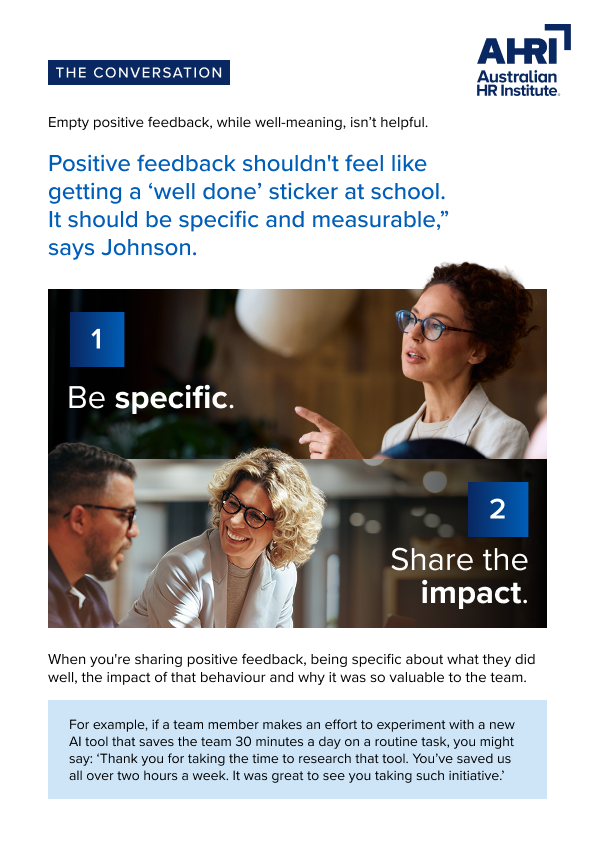
- When positive feedback doesn’t land as intended
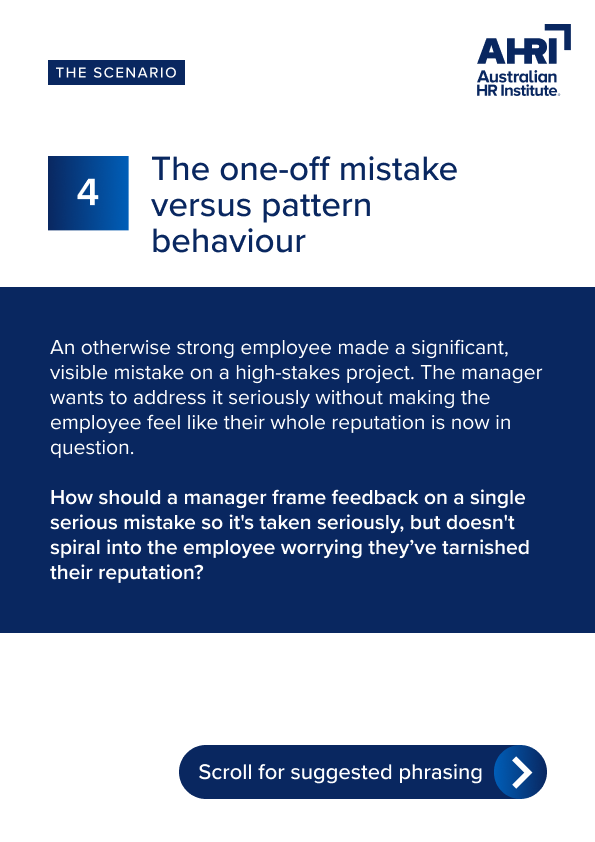
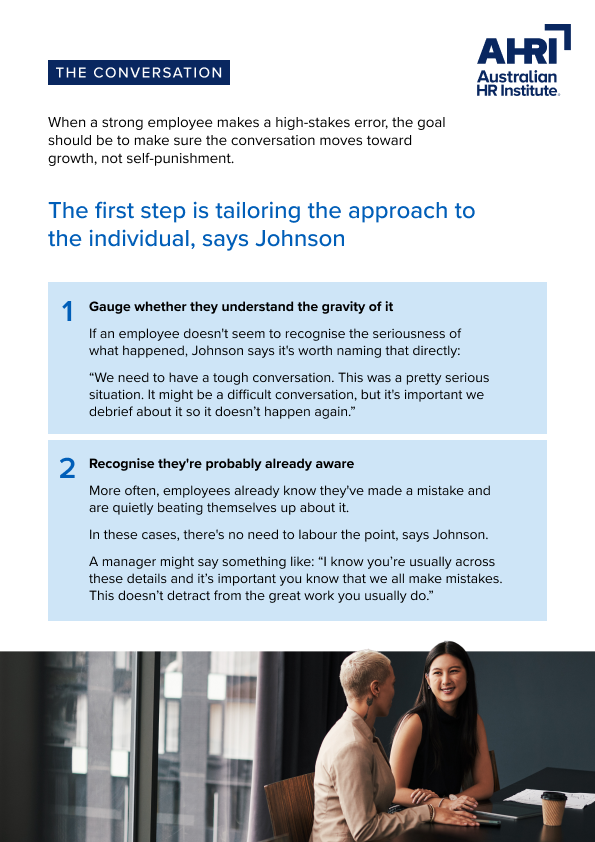
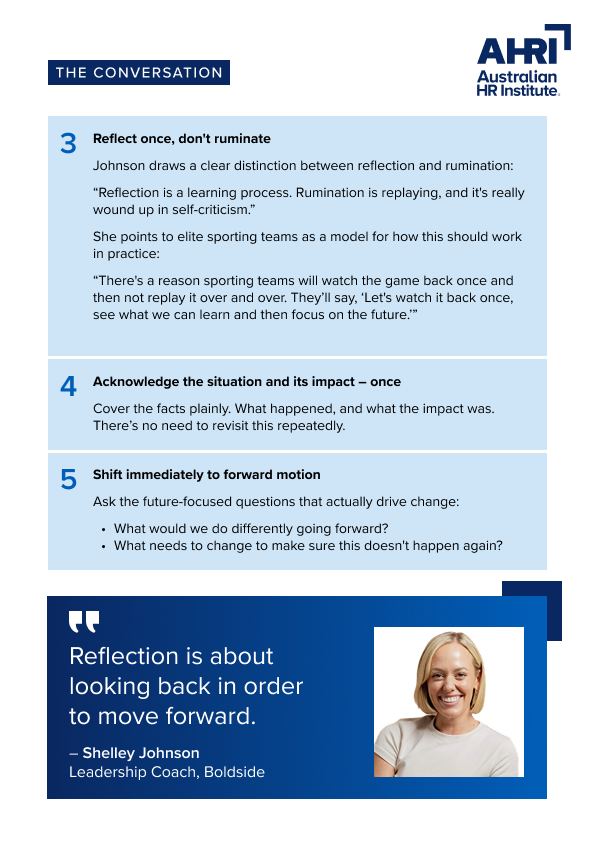
- The one-off mistake versus pattern behaviour
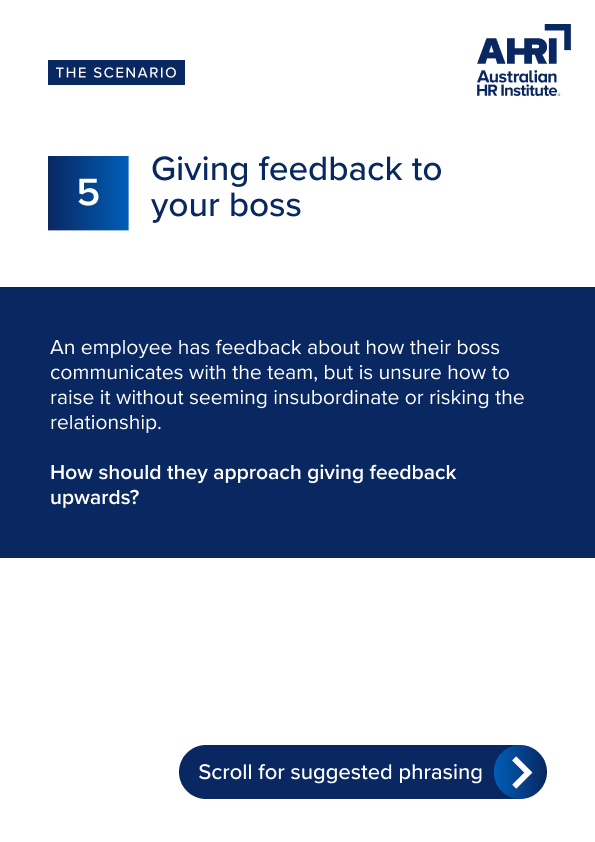
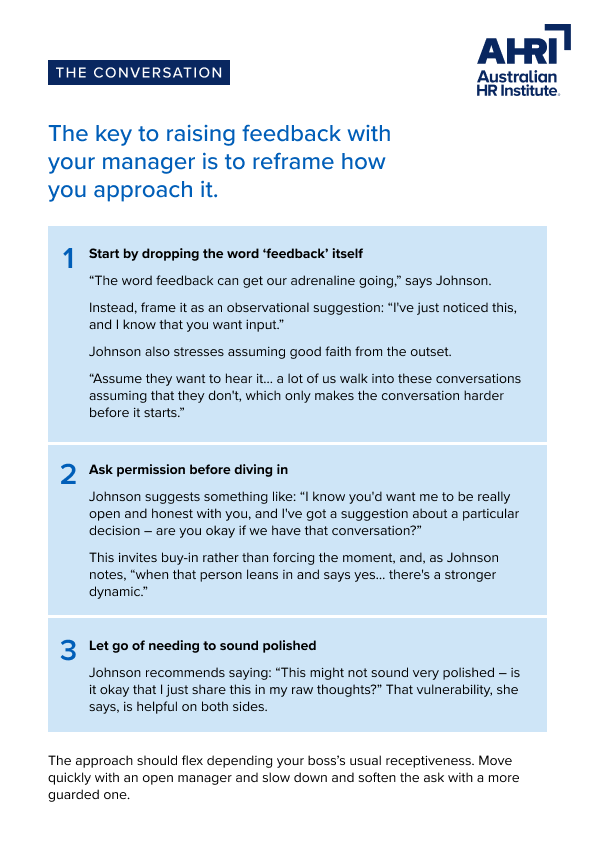
- Giving feedback to your boss


Download a printable version here
Key takeaways to keep in mind
Johnson shares the following considerations HR can ask managers to keep in mind:
- Reset expectations before you need them. Set the ground rules the moment a manager takes on a new team, rather than waiting for an issue to force the conversation.
“As soon as you transition, you have that ‘expectations’ conversation up front,” she says. - Solve the resistance before you solve the issue. If an employee gets defensive, the original problem has to wait.
“The core issue we must address is the defensiveness, because until we can solve the defensiveness, we’re never going to solve the other issues… The antidote to defensiveness is curiosity,” she says. - Positive feedback deserves the same effort as constructive feedback. Avoid generic ‘well done’ feedback.
“Be specific and share the impact.” - After a mistake, focus on moving forward. Reflecting once is useful, but replaying it on a loop is counterintuitive.
“There’s a reason sporting teams will watch the game back once and then not replay it over and over, because they know that rumination doesn’t help us… It’s the difference between reflection and rumination. Reflection is a learning process.” - Give people, including yourself, permission to be imperfect. This applies to feedback in any direction, including up to your own boss.
You can say: Is it okay if I just share this in my raw thoughts?“It doesn’t need to be polished. It just needs to be said,” says Johnson.
🧰 HR’s career resource toolkit
- Article: A guide to supporting first-time managers.
- Course: Encourage collaboration and create a positive and engaged work environment with AHRI’s Enhancing Your Coaching Mindset course.
- Course: Leading Difficult Conversations. Learn how to achieve the best possible outcomes while maintaining harmonious working relationships.
- Video: How can HR handle feedback around underperformance linked to mental health challenges? Find out in The Big Ask with D’Neale Prosser.



