
A recent ‘iced-coffee’ debate has prompted some recruiters to reconsider what interview professionalism looks like. Two recruiters weigh into the debate and offer tips to address potential unconscious biases during the recruitment process.
Last month, a US-based recruiter posted a TikTok discussing a candidate who brought an iced coffee into their job interview. She strongly urged other Gen Z candidates to avoid doing the same.
The recruiter, who has 16 years’ experience under her belt, said: “[In] my opinion… it’s perceived that when you show up with an iced coffee [to a job interview] that this is just a stop off on your list of errands for the day. It looks a little too casual for me.”
Her video has generated widespread discourse online – including Gen Z employees clapping back at what they say are “weird, made up standards”, as well as local experts supporting the recruiters perspective.
This has led to conversations about how modern expectations around interview etiquette and overall workplace professionalism might be evolving.
We asked two recruitment experts for their take, and what this discourse might indicate about generational shifts taking place in the workforce. Here’s what they had to say.
Is this really just bias against Gen Z?
From the perspective of one camp of this conversation, the consensus is that this really doesn’t have much to do with an iced coffee at all, but rather, the potential biases that some people may hold towards certain Gen Z behaviours.
AHRI’s 2025 Older and younger workers research (exclusive to members) shows that a majority of employers score younger workers lower than older workers on traits that reflect work ethic and emotional resilience.
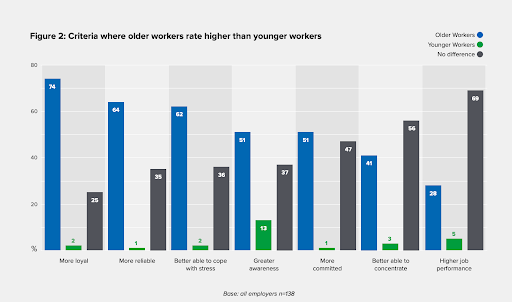
With Gen Z making up 27 per cent of the global workforce, these biases could be holding some employers back from securing the talent they need to secure current and future pipelines.
Shane Little, Managing Director of Enterprise Solutions APAC at Hays, stresses the importance of seeing past personal biases or preferences.
“If I was on the receiving end of a candidate coming to an interview with a coffee – whether it’s iced or not – and they demonstrated high capability, interest and research into the organisation, would I see past that? A hundred per cent,” he says.
1. What is deemed ‘professional’ today?
Another question sparked from this debate is whether or not businesses need to adjust their expectations of ‘professional’ conduct.
“What we deem corporate or professional has changed, especially post-COVID,” says Lauren Haxby, Senior Practice Director – Finance and Accounting at Robert Half. “Previously, [for example] if men weren’t wearing a tie, we’d think they hadn’t made an effort. That’s just not the case these days,” she adds.
Little echoes this sentiment.
“I’d always encourage an interviewer to look past the first impression,” he says. “Hiring managers or interviewers should not be imposing their experience of being a jobseeker of the past upon the jobseekers of today.”
Ruling a candidate out because they don’t align with traditional expectations around professionalism blocks organisations from benefiting from the kind of new thinking which encourages innovation, says Little.
None of this means professional standards should be abandoned. Preparation, courtesy and clear communication still matter, and some roles will always demand a more formal presentation.
The task for hiring teams is to separate the expectations that genuinely predict performance from those that are just tradition, and to be upfront with candidates about which is which.

2. How can you fairly determine organisational fit
Finding the right fit is about allowing the job seeker to be authentic in the interview process, says Little.
“I know a number of media or technology organisations in the Australian marketplace who would feel completely comfortable with candidates turning up with a coffee or a can of coke.”
For HR teams, consider spelling out expectations up front. Tell candidates what the interview will involve and what’s normal for the workplace, so nobody is left second-guessing the tone.
Then focus the assessment on how they think, communicate and solve problems, rather than on whether they’ve read the room the way a previous generation would have.
Finding the right fit is important, says Haxby, but she urges employers to carefully define what that means for them to avoid simply hiring a homogenous workforce.
“[Organisational] fit is hard to explain, but employers should ask themselves: Is it somebody that’s a really strong team player? Is it somebody that’s really helpful and goes above and beyond? Is it somebody who is really eager to learn or welcoming of others?”
Little agrees and stresses the importance of getting this right.
“You don’t want to end up in the wrong fit, right? That equates to a loss of time, a loss of energy, loss of resources, and there’s a cost to the employer of making the wrong hire.”
3. How can you minimise unconscious bias?
Everybody has unconscious bias, whether we care to admit it or not, says Haxby.
“We see it with our clients all of the time. They might say they loved a candidate, and when you ask why, they just say, “Oh, he was a great bloke.”’
Hwere are three ways hiring managers to reduce the chance of unconscious bias clouding the interview process.
1. Set structured and standardised interview questions
“Have really clear criteria around how you are judging candidates you’re interviewing so you don’t come up with a subjective opinion,” says Haxby.
Now, you have structured scoring that supports why you like them. Another thing she suggests is ensuring you have a diverse hiring panel – perhaps even with a Gen Z representative on it.
2. Separate who assesses from who decides
Atlassian shows how structure can be built into the process itself. Its ‘values interview’, which assesses alignment with the company’s five values, is usually conducted by someone outside the hiring team, such as a person from Sales, HR or Customer Support.
The conversation is guided by set questions but kept fairly informal, with the aim of understanding a candidate’s mindset. Atlassian also distinguishes values from culture.
Culture shifts as the company grows and varies between offices, while values stay constant, they say. That distinction matters, because “culture fit” is often where the “great bloke” instinct Haxby describes returns.
The final decision then goes to a Hiring Committee that works independently of the interviewers, seeing only specific information such as interview feedback and CV details.
3. Make interviewers translate the their first impressions
Haxby’s “great bloke” example shows how vague praise can hide bias, and the same goes for criticism. Words like “polished”, “professional” and “not quite the right fit” sound like judgements, but they usually describe impressions.
HR can help hiring managers unpack those impressions by asking them to describe the behaviour, not the vibe. “Not professional” might become “arrived five minutes late without notice”, while “not the right fit” might turn out to mean “I didn’t like what they wore to the interview”.
From there, HR can coach the manager on which impressions deserve attention, because some will matter, and which are personal biases with no bearing on whether the candidate can do the job.
AHRI’s research also suggests:
- Using age-neutral language in job ads to ensure inclusivity from the outset
- Monitoring recruitment data to identify and address and implicit bias within hiring systems
- Training hiring managers in unconscious bias awareness
- Ensuring recruitment tools, such as AI technologies and automated resume screeners, are audited for biases
“What we deem corporate or professional has changed, especially post-COVID. Previously, [for example] if men weren’t wearing a tie, we’d think they hadn’t made an effort. That’s just not the case these days.” – Lauren Haxby, Senior Practice Director – Finance and Accounting at Robert Half.
4. What is Gen Z looking for in the interview?
Businesses also need to remember that candidates are also interviewing them for values alignment.
Over 40 per cent of Gen Z and Millennials have rejected a potential employer due to values misalignment, according to Deloitte’s 2026 Gen Z and Millennial Survey.
“What stands out this year is the level of realism coming through the data. Gen Zs and millennials are not disengaged from work or growth, but they are far clearer about what they’re prepared to trade off,” says Pip Dexter, Chief People and Purpose Officer at Deloitte Australia.
Haxby notes that younger candidate are now more comfortable asking questions about wellness, benefits, flexibility and career progression.l
“They’re asking, ‘What am I getting out of this?’” she says.
Talent who ask tough questions often demonstrate an ability to think critically and strategically. If your hiring managers aren’t comfortable and capable of addressing a difficult or direct question, Little warns that you might run the risk of filtering out the best talent.
“When asked a direct question, deal with it in a really open, transparent and upfront way. Defensiveness doesn’t create the right environment and the candidate will see through that quite quickly,” he says.
As a longer term action, both Little and Haxby stress the importance of building a robust EVP which speaks to what newer generations are looking for in their work lives.
“The generations entering the workforce now live in a world of constant feedback and immediate access to information, including reviews from current and departed employees,” says Little.
“Younger candidates are looking at the value and social impact of the organisation, the alignment with their values and their beliefs, and if the interview process doesn’t help them understand that, the organisation is going to do themselves a disservice.”
🧰 HR’s career resource toolkit
-
- Course: Developing and Embedding an Employee Value Proposition.
- Course: Learn how to approach talent management as a dynamic and holistic process with this AHRI course.
- Article: What’s the secret to attracting Gen Z employees?
- Article: What’s retaining and attracting talent in Q4?



